
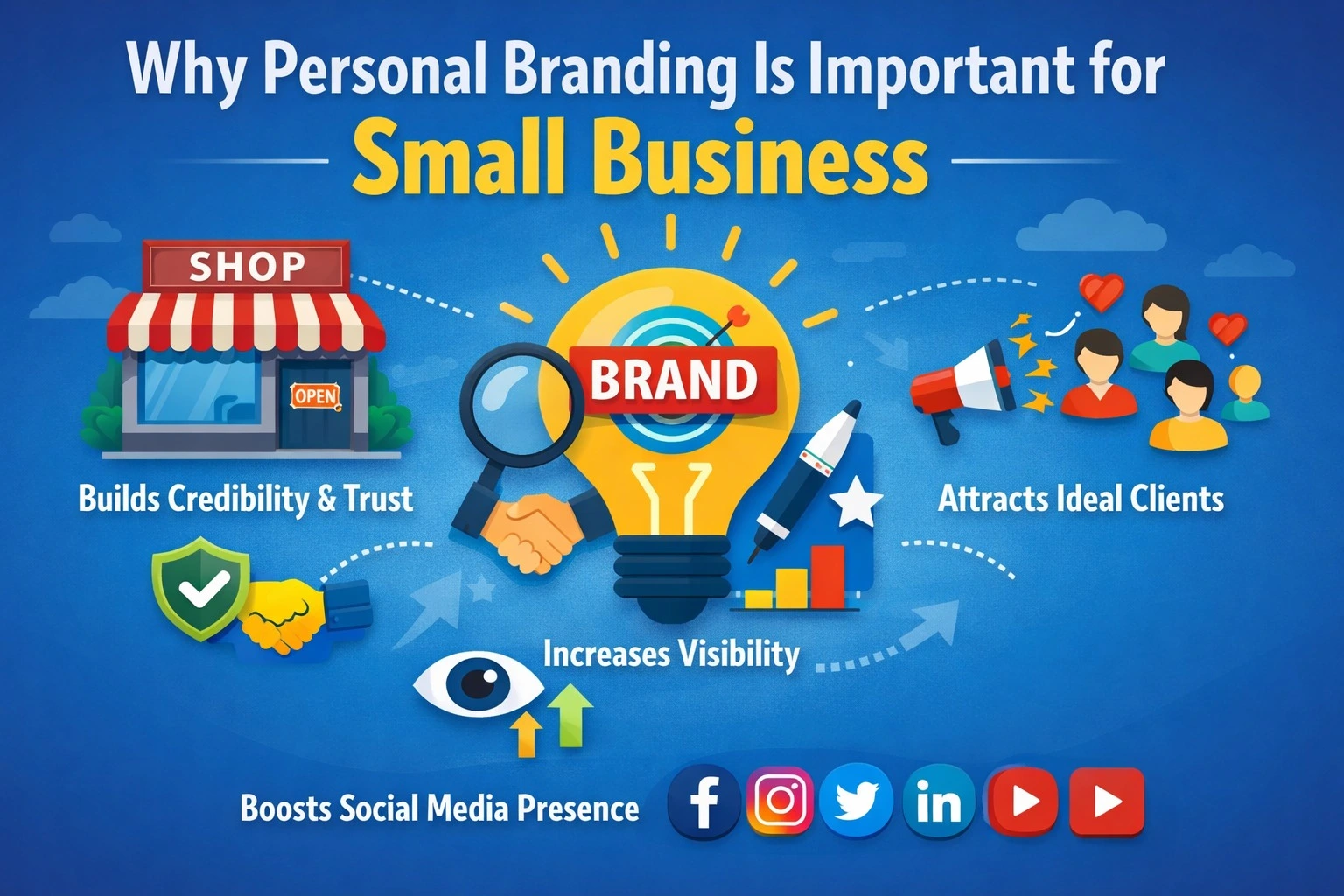
Small business owners are feeling the pressure more than ever. Customers compare dozens of options before making a decision, advertising costs keep rising, and trust has become harder to earn. Many businesses offer similar services, similar prices, and similar promises, which makes it difficult to stand out. As a result, even skilled and hardworking owners struggle to attract consistent leads and build long term loyalty.
This is where personal branding becomes a game changer. A personal brand reflects who you are, what you stand for, and how customers perceive you. It is not just a logo or a tagline. It is your reputation, your story, and your distinct voice in the market. A strong personal brand helps you stand out, build relationships, and create long term success that generic business branding cannot deliver alone.
What Is Personal Branding?
Personal branding is the deliberate process of shaping how others perceive you through your values, expertise, online presence, and everyday interactions. It shows people why you are credible, what you stand for, and why they should choose you over competitors. In essence, your personal brand tells your story before customers even contact you.
It goes beyond simply being active on social media or having a professional photo. Personal branding is about consistently communicating your knowledge, your experience, and your point of view in a way that feels genuine. When people repeatedly see useful insights from you, hear your opinions on industry trends, or learn from your experiences, they begin to associate your name with trust and authority. Over time, this recognition makes your name familiar, and familiarity often leads to preference.
A strong personal brand also humanizes your business. Customers do not only want to know what you sell. They want to know who they are buying from. When you share your journey, your challenges, and the values that guide your work, people feel more connected to you. That emotional connection plays a major role in decision making, especially for small businesses where relationships matter as much as price or features.
Why Personal Branding Matters for Small Business Owners
1. Builds Instant Trust and Credibility
Customers buy from people they trust. When you consistently show your expertise and values across platforms, people start to see you as a reliable leader in your niche. Establishing credibility builds confidence in your products or services long before a sales conversation begins.
2. Boosts Visibility and Recognition
Personal branding increases your visibility online. Whether someone searches for your name on Google or finds your profiles on LinkedIn or Instagram, consistent branding makes your presence more searchable and memorable. This visibility helps you attract organic traffic and new opportunities.
3. Differentiates You From Competitors
Small businesses often offer similar products or services. What differentiates you is you: your experience, your values, and your unique voice. A personal brand highlights your uniqueness, helping customers choose you over a faceless competitor.
4. Attracts Ideal Clients and Partners
A clear personal brand helps you attract the right kind of customers, not just more customers. Clients who resonate with your values are more likely to stay loyal, recommend you to others, and even pay premium prices for the value you represent.
5. Supports Long-Term Growth and Opportunities
A robust personal brand doesn’t just help with sales. It opens doors to partnerships, speaking engagements, media features, collaborations, and talent acquisition. A strong reputation makes your business more attractive in many ways.
Personal Branding Impact
Below is a simple representation of how personal branding influences small businesses:
| Impact Area | Percentage / Effect | Source |
| Consumers trust brands with active leaders | 82% | via LinkedIn data |
| Consumers prefer buying from relatable brands | 77% | Personalisation research summary |
| CEO/public figure social media engagement boosts connection | 70% | via branding articles |
| Lead conversion improves with visibility | Significant (qualitative) | Business branding analysis |
This table shows that personal branding isn’t just a marketing buzzword, it has measurable and meaningful effects on how customers see and engage with businesses.
Real Case Study: Local Consultant vs. Branded Competitor
Meet Priya Sharma, a marketing consultant in Delhi. Priya launched her consultancy in 2024, offering digital marketing strategy services for small businesses. Initially, she relied only on her business website and basic SEO. Her results were mediocre: low inquiries and sporadic engagement.
In late 2024, Priya made a strategic change. She started posting her insights regularly on LinkedIn, sharing tips, short videos, client wins, and lessons from her journey. She updated her LinkedIn banner and bio to clearly communicate her expertise and values.
Within 6 months, Priya saw:
- Website traffic increase by 65% from personal brand exposure on social platforms.
- Lead inquiries increase by 80%, mostly from clients who found her content engaging and trustworthy.
- Higher conversion rates, as clients mentioned they felt they “knew her” before contacting her.
Priya’s personal brand became the main driver of her business growth, not just ads or website SEO. While her competitors offered similar services, Priya’s network, recognition, and personal authority gave her the edge.
How to Build a Personal Brand in 2026
Step-by-step, here’s how you can start building your personal brand:
Define Your Story and Values
This is the foundation of personal branding. Before you post anything online, you need clarity about who you are and what you want to be known for. Your story includes your background, your journey, your struggles, and the lessons that shaped your expertise. People connect with stories far more than with sales messages.
Your values matter just as much as your skills. Think about what guides your decisions. Maybe you believe in honest pricing, fast customer service, long term relationships, or high quality work over quick profits. When you communicate these values clearly, you attract customers who believe in the same things. That alignment makes your business relationships stronger and longer lasting.
You should also define the specific value you deliver. Instead of saying you are a web designer, clarify that you help small businesses generate more leads through conversion focused websites. This level of clarity makes your personal brand memorable and easier to trust.
Choose Primary Platforms
You do not need to be everywhere. In fact, trying to manage too many platforms often leads to burnout and inconsistent posting. It is smarter to focus on one or two platforms where your ideal customers actually spend their time.
If you work with professionals or B2B clients, LinkedIn can be powerful because people use it for learning and networking. If your business is visual or lifestyle oriented, Instagram may work better. If you enjoy speaking and explaining ideas, YouTube or short video platforms can help you build authority quickly.
The goal is to show up consistently where your audience already pays attention. When they see your name and content regularly on a platform they trust, your credibility grows naturally. Over time, you become a familiar voice in their feed, and that familiarity increases the chances they will contact you when they need your services.
Create Consistent Content
Content is how people experience your personal brand. Every post, article, or video becomes proof of your expertise and your way of thinking. You do not need to be perfect, but you do need to be consistent.
Share practical insights from your daily work. Talk about problems your customers commonly face and how you solve them. Explain industry trends in simple language. Share lessons you learned from mistakes or challenges. This kind of content positions you as experienced and approachable at the same time.
Consistency also means maintaining a similar tone and message. If you always talk about helping small businesses grow, your audience will clearly understand what you stand for. Over time, your content builds a library of knowledge that works for you day and night, attracting new people who discover your posts even months later.
Engage Authentically
Personal branding is not just about posting. It is also about conversations. When people comment on your posts or send messages, your responses shape how they feel about you. A thoughtful reply can turn a casual follower into a loyal customer.
Join discussions in your industry. Comment on other experts’ posts with useful insights instead of generic praise. When you contribute meaningfully, more people notice you and start associating your name with expertise.
Authentic engagement means being human, not robotic. You can share opinions, appreciate others’ work, and even admit when you do not know something. This honesty builds trust and makes your personal brand feel real rather than promotional.
Monitor and Improve
Personal branding is an ongoing process, not a one time effort. You should regularly look at how people respond to your content and interactions. Notice which topics get more engagement, which posts lead to inquiries, and which messages connect most with your audience.
Feedback helps you refine your approach. If people respond strongly to educational tips, create more of them. If personal stories generate conversations, share more experiences. Over time, you will understand what your audience values most about you. Improvement also involves upgrading your profiles, visuals, and messaging as your business grows. As your expertise deepens, your personal brand should evolve too. This continuous refinement keeps your brand relevant and aligned with your goals.
Final Thoughts
In 2026, brands that fail to build genuine personal visibility risk blending into a sea of generic competitors. Meanwhile, small business owners who intentionally shape their personal brand create lasting trust, stronger connections, and growth that often outpaces traditional marketing tactics.
Your personal brand is not just an asset. It is a multiplier that strengthens your business brand, opens new opportunities, and builds relationships customers truly value. When your expertise, story, and values are presented clearly across your website and digital platforms, people feel more confident choosing you over others.
This is also where having the right digital foundation makes a real difference. A well designed website, strong online presence, and consistent branding across platforms help present your personal brand professionally. Many small business owners choose to work with experienced digital partners like Pointer Soft Technologies to align their website, design, and online strategy with the personal reputation they want to build. When your personal identity and business presence support each other, your marketing becomes more effective, your message becomes clearer, and your growth becomes more sustainable.
FAQs About Personal Branding
Q1: Is personal branding only for social media?
No. Social media amplifies personal branding, but your brand also reflects in your website, emails, partnerships, speaking engagements, and the way you interact with clients.
Q2: How much time does it take to see results?
Results vary, but many small business owners begin noticing improved visibility and engagement within a few months of consistent effort. Engagement and trust build over time.
Q3: Do I need professional photos or design?
Professional visuals help, but what matters more is clarity in your message and consistency in how you present yourself. Authentic content often outperforms polished but impersonal content.
Q4: Can personal branding help my website’s SEO?
Yes. When people search your name or expertise, they are more likely to find your content, social profiles, and website. This boosts your authority signals in search engines over time.
Q5: Is personal branding worth it for service businesses?
Absolutely. Service businesses rely heavily on trust and credibility, two things personal branding directly builds.