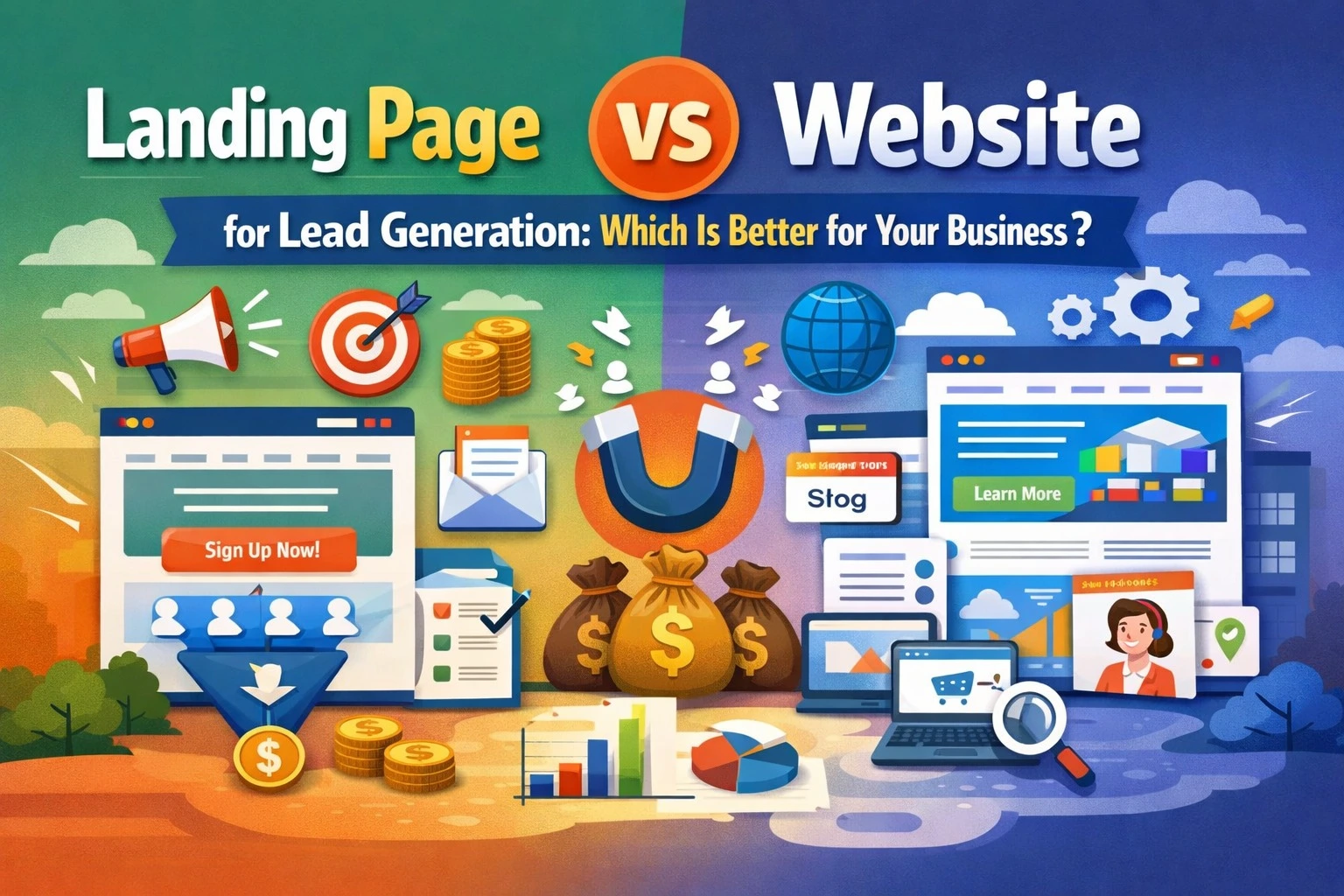
Businesses looking to grow online often face a common question: Should you create a landing page or invest in a full business website for lead generation? Both options can attract potential customers, but they serve different purposes.
Choosing the right approach can significantly impact how many enquiries, leads, and customers your business receives. Understanding the difference between a landing page and a website helps you decide which option works best for your marketing strategy. This guide explains the difference between landing pages and websites, their advantages, real case results, and which one is better for generating business leads.
What Is a Landing Page?
A landing page is a single web page designed with one clear objective: converting visitors into leads or customers. It is usually connected to a marketing campaign such as Google Ads, social media ads, or email marketing. Landing pages remove distractions and focus the visitor on a specific action like:
- Filling out a contact form
- Booking a consultation
- Downloading a brochure
- Signing up for a service
Key Features of a Landing Page
A well-designed landing page focuses on one clear goal: converting visitors into leads or customers. Unlike a full website, it delivers a single message and directs users toward one specific action. The following features make landing pages highly effective for lead generation.
Single Page with a Focused Message
A landing page uses a single page to present one clear message or offer. Instead of showing multiple services or large amounts of information like a full website, it highlights a specific product, service, or campaign. This focused approach helps visitors quickly understand the purpose of the page and encourages them to take action.
Strong Call-to-Action (CTA)
A landing page uses strong call-to-action buttons to guide visitors toward the next step. Businesses place CTAs such as “Get a Free Quote,” “Book a Consultation,” or “Download Now” throughout the page. These clear prompts encourage visitors to complete the desired action and generate leads for the business.
Minimal Navigation to Avoid Distractions
Landing pages limit or remove navigation menus to keep visitors focused on the main goal. Traditional websites allow users to browse multiple pages, but landing pages reduce these options to prevent distractions. This focused structure increases the chances that visitors will complete the intended action instead of leaving the page.
Optimized for Conversions
Designers build landing pages specifically to improve conversion rates. They use persuasive headlines, compelling content, customer testimonials, trust signals, and simple forms to guide visitors through the page. Every design element encourages visitors to take action, such as submitting a form or contacting the business.
Often Used in Paid Marketing Campaigns
Businesses use landing pages in paid marketing campaigns like Google Ads, social media advertising, and email marketing. Instead of sending visitors to a general website page, they direct them to a dedicated landing page designed for that campaign. This targeted approach improves lead generation and increases the return on marketing investment.
What Is a Business Website?
A business website is a complete online platform that represents your company, brand, services, and credibility. Unlike a landing page, it includes multiple pages that provide detailed information about your business. Typical pages on a business website include:
- Home page
- About us
- Services
- Blog
- Contact page
Key Features of a Business Website
A business website serves as the digital foundation of a company’s online presence. Unlike a landing page that focuses on a single action, a business website provides comprehensive information about the company, its services, and its expertise. The following features make a business website important for building trust and generating long-term leads.
Multiple Pages with Detailed Information
A business website usually contains several pages that provide detailed information about the company and its offerings. Common pages include the homepage, about us, services, portfolio, blog, and contact page. This structure allows visitors to explore different aspects of the business, understand the services offered, and make informed decisions before contacting the company.
SEO Optimization for Search Engines
One of the biggest advantages of a business website is the ability to optimize it for search engines. With proper on-page SEO, keyword optimization, and structured content, websites can rank on search engines like Google. This helps businesses attract organic traffic from users who are actively searching for their products or services.
Company Branding and Credibility
A professionally designed website helps establish brand identity and credibility. Elements such as logo, brand colors, client testimonials, case studies, and certifications build trust among visitors. When potential customers see a well-designed website with clear information, they are more likely to consider the business reliable and professional.
Blog and Content Marketing Opportunities
Business websites often include a blog section where companies can publish informative articles related to their industry. Blog content helps businesses educate their audience, showcase expertise, and target various keywords for SEO. Over time, consistent content marketing can significantly increase website traffic and authority.
Long-Term Traffic Generation
Unlike short-term marketing campaigns, a well-optimized business website can generate traffic for years. Through SEO, blog content, and internal linking strategies, websites can continuously attract visitors from search engines. This makes a business website a valuable long-term asset for generating leads and growing the business online.
Key Differences Between Landing Page and Website
| Feature | Landing Page | Business Website |
| Structure | Single page | Multiple pages |
| Purpose | Conversion focused | Information + branding |
| Navigation | Limited or none | Full navigation |
| SEO Potential | Limited | High |
| Use Case | Marketing campaigns | Long-term online presence |
| Content Depth | Minimal | Detailed |
When a Landing Page Is Better for Lead Generation
Landing pages are the best choice when your goal is fast conversions from marketing campaigns. Use a landing page when you run marketing campaigns that require visitors to take a specific and immediate action. A landing page keeps the message focused and increases the chances of converting visitors into leads.
Google Ads Campaigns
Businesses use landing pages with Google Ads to convert search traffic into leads. Instead of sending users to a general website page, they direct them to a dedicated landing page that highlights a specific service or offer. This approach improves ad relevance and increases conversion rates.
Facebook or Instagram Ads
Companies often run social media ads to promote services, offers, or products. A landing page helps capture leads by presenting a clear message and a strong call-to-action. Visitors who click the ad can quickly fill out a form, request a quote, or contact the business.
Email Marketing Campaigns
Businesses send email campaigns to promote services, offers, or new products. A landing page helps guide recipients toward a specific action, such as signing up for a service or downloading a resource. This focused experience improves engagement and lead generation.
Product Launch Promotions
When businesses launch a new product or service, they create landing pages to introduce the offer and highlight its key benefits. The landing page explains the value of the product and encourages visitors to take action, such as purchasing, registering, or requesting more information.
Event Registrations
Companies often use landing pages to promote webinars, workshops, or business events. The landing page provides event details, benefits, and a simple registration form. This makes it easier for visitors to sign up and helps businesses collect attendee information efficiently.
When a Website Is Better for Lead Generation
Choose a website when your goal is to build a strong online presence and generate long-term business growth. A well-structured website helps businesses attract visitors, build trust, and provide detailed information about their services.
Ranking on Search Engines
Businesses use websites to rank on search engines by optimizing pages with relevant keywords, quality content, and proper SEO practices. A website allows companies to create multiple pages and blog posts that help them appear in search results when potential customers look for related services.
Building Brand Trust
A professional website helps businesses build credibility and trust with potential customers. Companies showcase their brand identity through logos, design, testimonials, certifications, and client reviews. When visitors see a well-designed website with clear information, they feel more confident about choosing that business.
Showcasing Services and Portfolio
Businesses use websites to present their services, past projects, and success stories. Service pages explain what the company offers, while portfolio sections display completed work and client results. This helps potential customers understand the company’s expertise and capabilities.
Attracting Organic Traffic
Websites attract organic traffic through search engine optimization and content marketing. Businesses publish blogs, guides, and informative pages that answer users’ questions. Over time, this content helps the website rank higher in search results and bring consistent visitors without paid advertising.
Providing Detailed Information
A website allows businesses to provide complete information about their company, services, pricing, and contact details. Multiple pages help visitors explore different aspects of the business and make informed decisions before contacting the company or requesting a service.
Best Strategy: Use Both Together
The most effective digital strategy is combining a professional website with targeted landing pages.
How Businesses Use Both
- The website builds credibility and SEO traffic.
- Landing pages are used for specific marketing campaigns.
- Paid ads drive traffic to landing pages for higher conversions.
This approach helps businesses achieve both:
- Long-term visibility in search engines
- High conversion rates from marketing campaigns
Tips to Improve Lead Generation on Landing Pages and Websites
1. Use Clear Call-to-Actions
Businesses should guide visitors by using clear and direct call-to-action buttons. Phrases such as “Get a Free Quote,” “Book a Consultation,” or “Contact Us Today” tell visitors exactly what step they should take next. Clear CTAs make the decision process easier and increase the chances of converting visitors into leads.
2. Optimize for Mobile Users
Businesses must design websites and landing pages that work smoothly on mobile devices. Since many users browse the internet on smartphones, responsive design ensures that pages adjust properly to different screen sizes. A mobile-friendly layout improves user experience and helps visitors navigate the site easily.
3. Improve Page Loading Speed
Businesses should focus on improving page loading speed to keep visitors engaged. Fast-loading pages reduce frustration and encourage users to stay longer on the site. When pages load quickly, visitors are more likely to explore the content and complete actions such as filling out forms or contacting the business.
4. Build Trust Signals
Companies should add trust signals to build confidence among potential customers. Elements such as client testimonials, certifications, awards, client logos, and case studies show proof of credibility and expertise. These trust indicators help visitors feel more comfortable choosing the business.
5. Simplify Contact Forms
Businesses should keep contact forms short and easy to complete. Asking only essential details such as name, email, phone number, and message It helps to reduces friction and encourages more visitors to submit the form. Simple forms improve lead generation by making the process quick and convenient for users.
Frequently Asked Questions (FAQ)
1. Is a landing page better than a website for lead generation?
Landing pages often convert better because they focus on a single action. However, websites are essential for building credibility and attracting organic traffic through SEO.
2. Can a business operate with only a landing page?
Some businesses use only landing pages for advertising campaigns, but a full website provides better branding, SEO visibility, and long-term growth.
3. How many landing pages should a business have?
Businesses can create multiple landing pages for different marketing campaigns, services, or target audiences.
4. Do landing pages help with SEO?
Landing pages can rank in search engines, but websites with multiple pages and blogs generally perform better for long-term SEO.
5. What is the ideal conversion rate for a landing page?
Conversion rates vary by industry, but landing pages often achieve 5%–10% conversion rates, which is usually higher than traditional website pages.
Final Thought
Both landing pages and websites play important roles in online lead generation. A landing page works best for conversion-focused campaigns, while a business website supports branding, SEO visibility, and long-term growth. For most businesses, the best strategy is not choosing one over the other but using both in a smart and balanced way. A professional website helps build credibility and attract organic traffic from search engines, while landing pages focus on converting marketing traffic into leads.
When businesses combine a well-structured website with optimized landing pages, they create a strong digital presence that consistently generates enquiries and potential customers. If you are planning to build a professional business website or high-converting landing pages, working with an experienced web design team can make a significant difference. Companies like Pointer Soft Technologies help businesses create modern, SEO-friendly websites and conversion-focused landing pages designed to attract visitors and turn them into valuable leads.