Most business owners pour time and money into driving traffic to their website, only to see visitors leave without taking any action. It’s frustrating to attract people but fail to convert them into leads or customers. Many websites rely solely on a basic contact form, hoping visitors will reach out on their own but that rarely happens. Others take a smarter approach by using lead magnets to capture contact details early in the visitor’s journey, creating opportunities to nurture them over time. The difference in results between these two approaches can be huge.
If your goal is consistent lead generation, it’s essential to understand how both contact forms and lead magnets work, why they sometimes fail, and how to use them strategically to turn more visitors into real business opportunities.
What Is a Contact Form?
A contact form asks visitors to reach out when they are ready to talk. It usually appears on a Contact Us page and sometimes in the footer. This approach assumes the visitor:
- Trusts your business already
The visitor believes your company is credible, professional, and reliable. This trust usually comes from strong reviews, testimonials, case studies, secure website design, and clear contact information. Without these signals, submitting a form feels risky, and people worry about spam or pushy sales follow-ups. - Understands your service clearly
The visitor knows exactly what you offer, who it is for, and how it solves their problem. Clear descriptions, simple language, pricing guidance, and examples of results help remove confusion. When visitors fully understand the value, contacting you feels like a logical next step instead of a gamble. - Feels ready to make an inquiry
The visitor is past the research stage and is seriously considering hiring someone. They likely have a defined need, urgency, and some level of budget in mind. Only a small portion of website visitors are at this stage, which is why contact forms alone often capture limited leads.
What Is a Lead Magnet?
A lead magnet offers something valuable in exchange for contact details. Instead of asking visitors to “Contact Us,” you offer help first.
Free website audit
This offer gives visitors a quick evaluation of their website’s performance, design, SEO, or user experience. It delivers immediate value by highlighting problems and opportunities for improvement. Businesses like this because it feels personalized and directly connected to their goals, making them more likely to share their contact details.
Pricing guide
A pricing guide explains typical costs, service packages, or factors that influence pricing. It helps remove uncertainty, which is one of the biggest reasons people avoid contacting companies. When visitors understand budget ranges in advance, they feel more comfortable starting a conversation.
Industry checklist
A checklist provides step-by-step items businesses can review to improve a specific area, such as website launch readiness, local SEO, or social media setup. It is easy to consume and highly practical. Visitors see it as a useful tool rather than marketing, which increases signups.
Ebook or quick-start guide
This resource offers deeper education on a focused topic, such as improving online presence or generating leads. It positions your business as an expert while helping readers solve a problem on their own. Because it promises clear learning and guidance, people are more willing to exchange their email to get it.
The Core Difference in Strategy
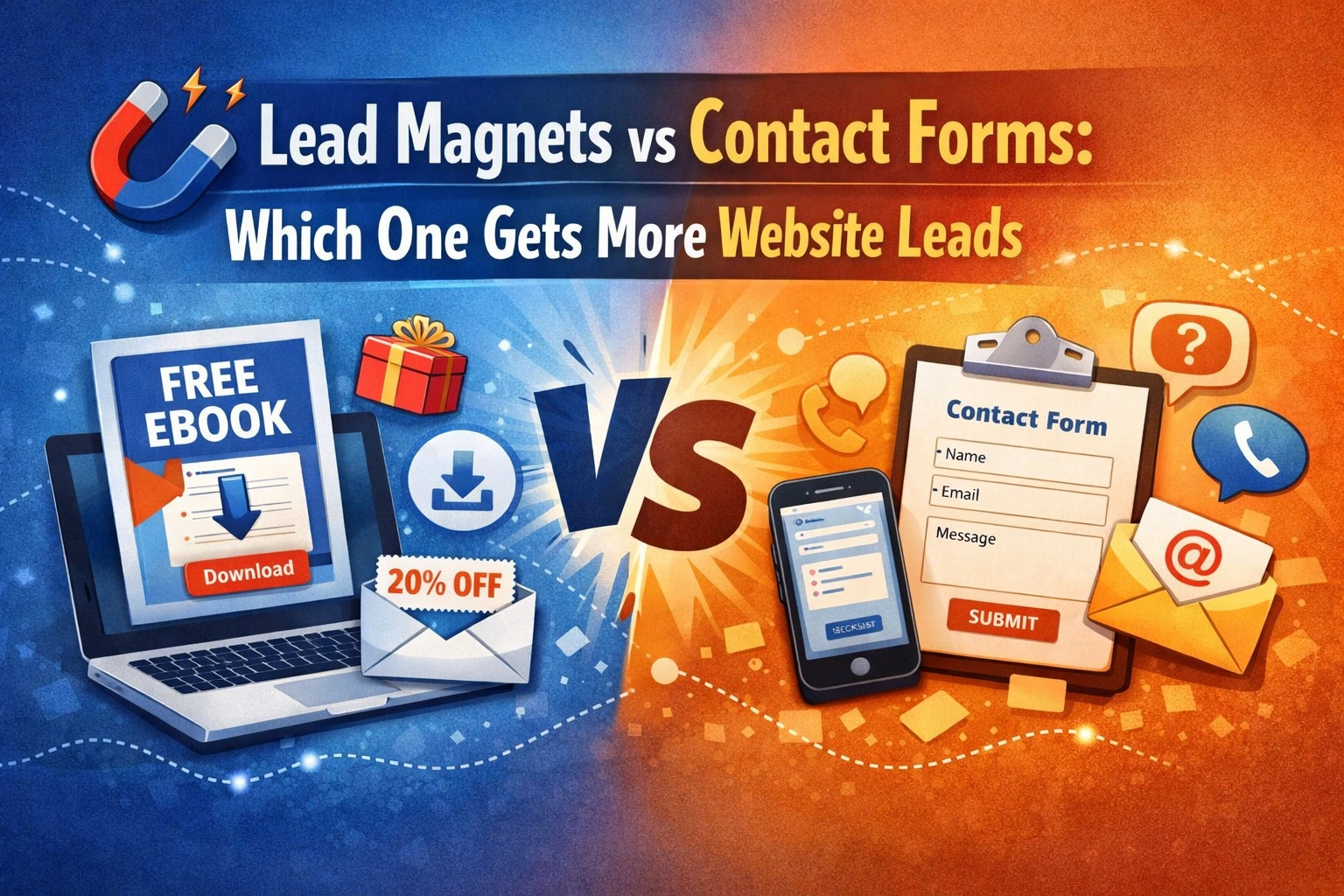
A contact form is designed to drive immediate action. It asks visitors to take a direct step toward doing business with you, usually by requesting a quote, booking a call, or sending a message. This approach works best for people who have already decided they need a service and are ready to speak with a provider right away.
A lead magnet, on the other hand, is built for relationship building. Instead of pushing for a sales conversation instantly, it offers something useful in exchange for contact information. This creates a softer first interaction and allows you to stay connected while the potential customer continues evaluating their options.
Most website visitors are still in research mode. They are comparing companies, reading articles, and trying to understand possible solutions to their problem. At this stage, they often feel uncertain and are not ready to commit to a direct inquiry. When they see a contact form that feels like the start of a sales process, hesitation naturally increases.
When you provide something helpful without pressure, such as a guide, checklist, or audit, visitors feel more comfortable sharing their email address. The interaction feels educational rather than transactional, which lowers resistance and builds trust over time.
Conversion Performance Comparison
Here is a simplified comparison based on common performance ranges seen across service business websites.
| Factor | Contact Form Only | Lead Magnet + Form |
| Average Visitor Intent | High only | Low to high |
| Typical Conversion Rate | 1% – 3% | 5% – 15% |
| Trust Required Before Action | High | Moderate |
| Lead Volume | Low | Medium to High |
| Lead Quality | Very High | Mixed but scalable |
| Follow-up Opportunity | One-time | Ongoing nurturing |
Contact forms often produce highly qualified leads, but the volume stays limited. Lead magnets bring in more people at different stages, giving you more chances to convert later.
Real Case Study (Service Business Website)
A small digital service company relied only on a “Request a Quote” contact form. The website received steady traffic from SEO and social media, but inquiries remained low.
They added a lead magnet: “Free 10-Point Website Performance Audit.” Visitors could download a short report after submitting their name and email. The audit also invited them to book a consultation. Here’s what changed over three months:
| Metric | Before (Form Only) | After (With Lead Magnet) |
| Monthly Website Visitors | 2,400 | 2,550 |
| Monthly Leads | 38 | 172 |
| Direct Contact Form Submissions | 38 | 41 |
| Lead Magnet Downloads | 0 | 131 |
| Consultation Bookings | 12 | 37 |
| Closed Deals | 5 | 14 |
Most new clients did not contact the company on their first visit. They downloaded the audit, read follow-up emails, and booked a call later. The lead magnet expanded the funnel instead of depending only on bottom-of-funnel visitors.
Why Lead Magnets Often Win
Lead magnets reduce pressure. Visitors do not feel like they are stepping into a sales call. They feel like they are getting help.
They also let you continue the conversation. Once someone joins your email list, you can educate them, share case studies, and build authority. A contact form gives you one chance. A lead magnet gives you many. Another major advantage is audience insight. When people download specific resources, you learn what they care about. That helps you tailor services and marketing.
Where Contact Forms Still Matter
Lead magnets do not replace contact forms. They support them. You still need a strong contact form for people who are ready to talk now. Removing it creates friction for high-intent visitors. The smart strategy combines both:
- Use lead magnets to capture early and mid-stage visitors
- Use contact forms for decision-ready prospects
Best Placement Strategy
Placement affects results as much as the offer itself. Important placements include:
Homepage hero section with a strong value offer
Placing your lead magnet in the hero section ensures visitors see it immediately when they land on your site. A clear benefit-driven headline and simple call to action can capture attention before users start scrolling, turning first impressions into lead opportunities.
Blog posts related to the lead magnet topic
When your lead magnet matches the topic of a blog post, conversions increase because the offer feels relevant. For example, a blog about website speed can promote a free performance audit. Readers already interested in the topic are more likely to sign up.
Exit-intent popups for leaving visitors
Exit-intent popups appear when a visitor is about to leave your website. They provide a final opportunity to offer value, such as a guide or checklist, instead of losing the visitor completely. Since the user was already leaving, this tactic can recover leads that would otherwise be gone.
Dedicated landing pages for ads and SEO
A focused landing page built around one lead magnet removes distractions and improves conversions. These pages work well for paid ads and search traffic because they match visitor intent closely and guide users toward a single action: signing up.
Which One Gets More Leads?
If you look only at direct inquiries, contact forms can seem effective because the people who fill them out are usually ready to talk. These leads often have strong intent and may convert faster. However, this view only captures a small portion of your total potential audience mainly those who are already close to making a decision.
When you measure total leads over time, including people who download resources, join your email list, and engage with follow-up content, lead magnets often outperform contact forms. They allow you to capture visitors earlier in their decision-making process and nurture them until they are ready to buy. This longer journey can result in a much larger overall pool of customers.
The most successful websites do not rely on just one method. They guide visitors through clear stages: first offering value, then building trust, and finally inviting a direct conversation. This step-by-step approach aligns with how people naturally make buying decisions online, moving from learning to confidence before committing to a purchase or inquiry.
FAQs
Do lead magnets reduce lead quality?
They can bring in people who are not ready to buy yet, but nurturing filters serious prospects over time. Many future clients enter through lead magnets first.
Are contact forms outdated?
No. They remain essential for high-intent users. The problem appears when businesses rely on them as the only lead capture method.
What is the best lead magnet for a service business?
Free audits, checklists, and pricing guides work well because they solve immediate problems and show your expertise.
How many fields should a lead capture form have?
Fewer fields usually increase conversions. Name and email often work best at the top of the funnel.
Can I use both a lead magnet and a contact form on the same page?
Yes. Offer the lead magnet as a low-commitment option and keep the contact form available for visitors ready to speak directly.
Final Thought
A website should do more than wait for visitors to reach out. It should guide them step by step offering value first, building trust next, and inviting conversation at the right moment. While contact forms capture visitors who are ready now, lead magnets create opportunities with those who will be ready soon. By combining both strategically, your website transforms from a static presence into a consistent lead generation system.
At Pointer Soft Technologies, we help businesses design websites that not only look professional but also convert visitors into real leads through smart lead capture strategies. With the right mix of design, content, and lead magnets, we make sure your website works as hard as you do.