
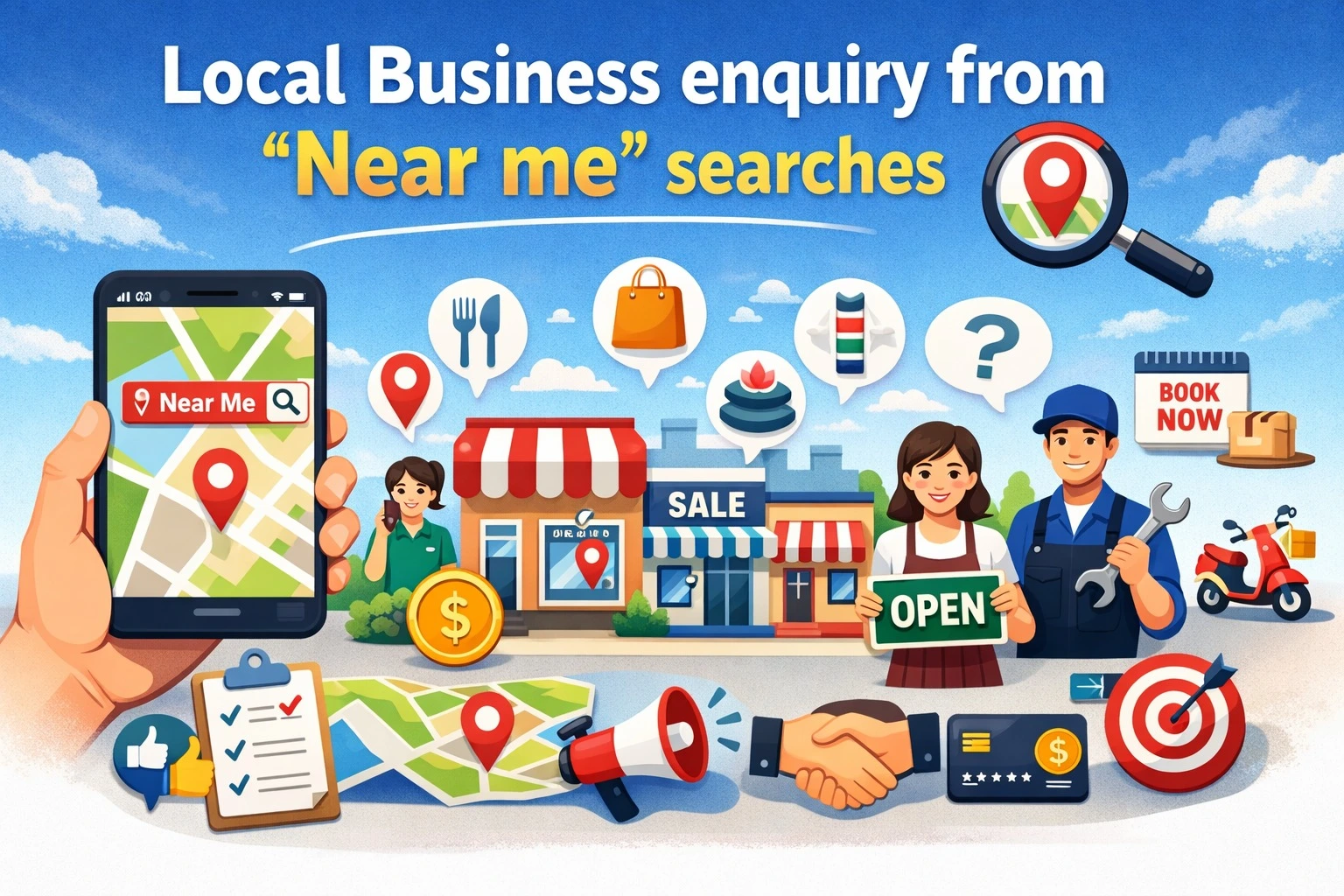
“Near me” searches have changed how customers discover local businesses. When someone searches “salon near me,” “best restaurant near me,” or “web designer near me”, they’re not browsing casually , infact they’re ready to visit, call, or book. For local businesses, this makes “near me” searches one of the highest-intent traffic sources available today.
The challenge is that ranking for these searches is no longer just about SEO keywords. Google now prioritizes location relevance, website experience, mobile usability, and trust signals. Businesses that align their website and local presence with these factors consistently attract more walk-in customers and enquiries.
Why “Near Me” Searches Matter More Than Ever
Google uses the searcher’s real-time location to deliver the most relevant local results. This means small and local businesses have a genuine advantage over big brands , if their website and local signals are properly optimized.
Users searching “near me” expect three things instantly: accuracy, speed, and trust. If your website loads slowly, lacks location clarity, or feels outdated, users bounce and Google notices. A well-designed, locally optimized website turns these searches into real customers.
How Google Decides Which Business Appears in “Near Me” Results
Google focuses on three core factors: relevance, distance, and prominence. While you can’t change your distance from the user, you can strongly influence relevance and prominence through smart website design and local optimization.
Your website should clearly communicate what you offer, where you operate, and why customers should choose you. Local intent must be visible—not hidden—in your design and content.
Website Design Strategies That Drive “Near Me” Customers
A local business website should act like a digital storefront. Visitors should instantly know that your business serves their area.
Start with location clarity. Your homepage, service pages, and footer should naturally mention your city, locality, or service areas. This helps both users and search engines understand your relevance for nearby searches.
Mobile-first design is non-negotiable. Most “near me” searches happen on mobile devices. Buttons like Call Now, Get Directions, and WhatsApp should be easy to tap without zooming or scrolling. Navigation must be simple and fast.
Page speed plays a direct role in local conversions. A slow website loses impatient mobile users. Optimized images, clean layouts, and lightweight code improve both rankings and user experience.
Trust signals matter more for local searches than generic ones. Display real customer reviews, Google ratings, business photos, and clear contact details. These reassure users that your business is genuine and nearby.
Content That Attracts Local Search Traffic
Generic content doesn’t rank well for “near me” queries. Your content should reflect local relevance naturally. Instead of writing broad service descriptions, explain how your service helps customers in specific locations or neighborhoods.
Location-specific service pages work especially well. For example, instead of one generic page, create pages targeting areas you serve, written in a helpful and non-spammy way.
Adding FAQs related to local concerns also boosts visibility. These often appear in featured snippets or voice search results.
Google Business Profile + Website = Local Growth Engine
Your website and Google Business Profile must work together. Ensure your business name, address, phone number, and working hours are consistent everywhere.
Embed Google Maps on your contact page. Add schema markup for local business details. These technical enhancements strengthen Google’s confidence in your location relevance.
When users click from Google Maps to your website, the experience should be seamless. Any confusion or mismatch reduces conversion chances.
Case Study: How a Local Business Increased Enquiries from “Near Me” Searches
A local service-based business in India was struggling to get leads despite being listed on Google Maps. Their website was outdated, slow, and lacked location-focused content. The website was redesigned with a mobile-first layout, clear location mentions, fast-loading pages, and strong call-to-action buttons. Service pages were rewritten to highlight nearby service areas, and customer testimonials were added.
Within three months, the business saw a noticeable improvement. Website traffic from local searches increased significantly, and enquiry calls from “near me” searches nearly doubled. The key change wasn’t aggressive SEO, it was better website design aligned with local intent.
Common Mistakes That Stop Businesses from Ranking Locally
Many local businesses unknowingly block their own growth. Some rely only on social media without a proper website. Others have websites that look good but fail to guide users toward action.
Ignoring mobile optimization, hiding contact details, or using generic content are frequent issues. “Near me” users don’t have time to search for information, it must be obvious and immediate.
Final Thoughts
“Near me” searches attract customers who are ready to take action. Local businesses that focus on smart website design, locally relevant content, and strong trust signals consistently perform better in capturing this high intent traffic.
When a website clearly communicates who it serves, where it operates, and why it is the right choice, both Google and potential customers respond positively. A locally optimized website is not just about achieving higher rankings. It is about converting nearby searches into real enquiries and revenue. This is where experienced web design and local optimization support from teams like Pointer Soft Technologies can help businesses turn online visibility into measurable growth.