
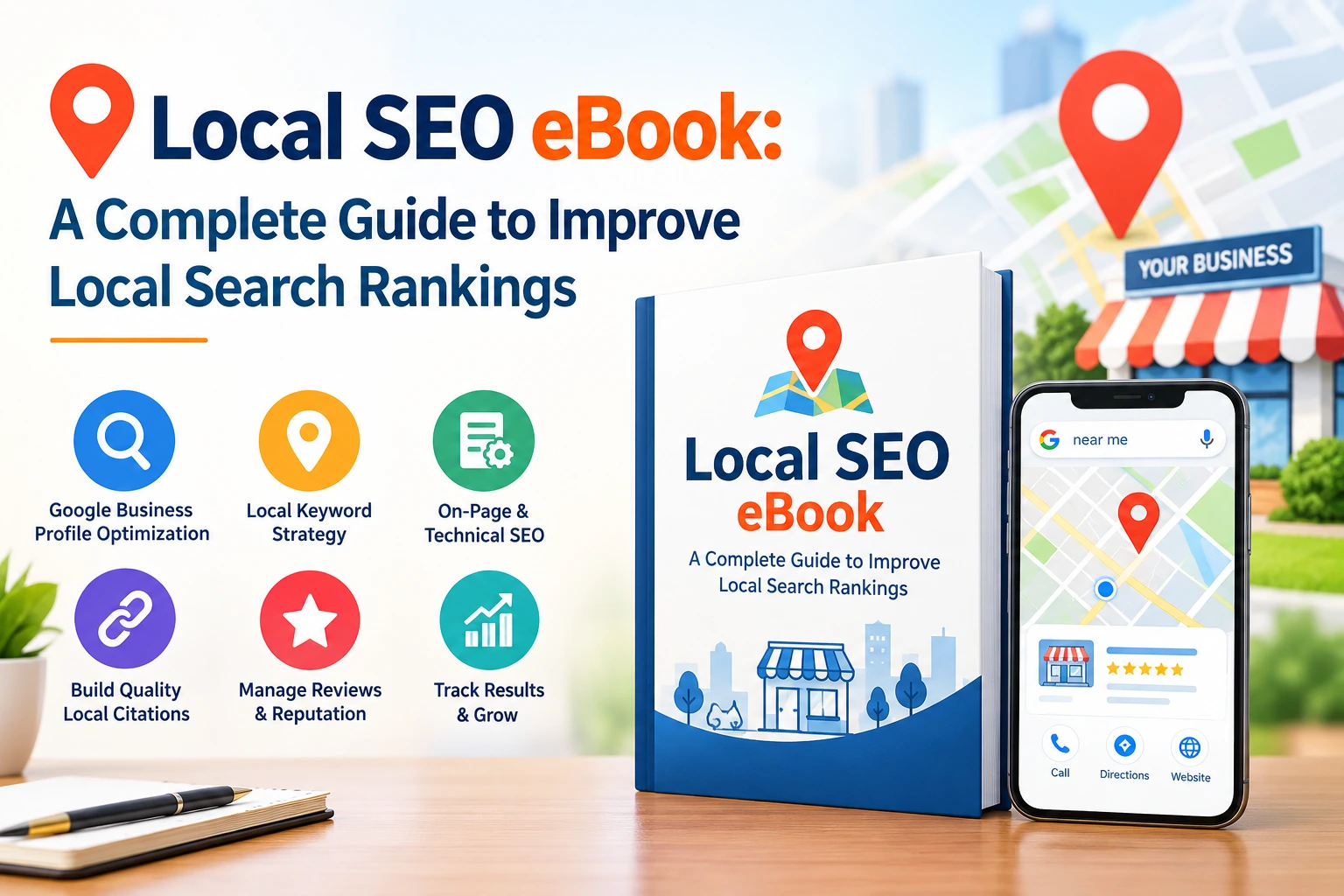
Local businesses can lose valuable customers when they fail to appear in relevant Google Search results and Google Maps listings. Even when a business offers excellent products or services, poor local visibility can prevent nearby customers from discovering it, contacting the team, or visiting its location.
A well-planned local SEO strategy helps businesses reach people who actively search for services in their area. From optimizing a Google Business Profile to building local citations and improving website content, every step can strengthen local search visibility and support business growth.
This Local SEO eBook explains the essential strategies businesses need to improve local rankings, attract relevant traffic, and generate more customer inquiries. For readers interested in broader search engine optimization techniques, Modern SEO Mastery: Complete Ranking eBook is another resource to explore.
What Is Local SEO?
Local SEO, or local search engine optimization, is the process of improving a business’s online visibility for searches related to a specific location. It helps businesses appear in relevant local search results, including Google Maps and location-based organic listings.
For example, a customer searching for “website designing company in Noida” wants to find a relevant service provider in or around Noida. Local SEO helps businesses improve their chances of appearing for such searches when their services, location, and online presence match the search intent.
Local SEO benefits businesses such as restaurants, clinics, hotels, home service providers, retail stores, agencies, and other companies that serve customers in particular geographic areas.
Why Is Local SEO Important for Small Businesses?
Customers often search online before choosing a nearby business. If your company does not appear prominently for relevant local queries, competitors may receive the calls, visits, and inquiries that could have gone to you.
Local SEO helps businesses:
- Improve visibility for location-based searches.
- Reach customers who are actively looking for relevant products or services.
- Strengthen their Google Maps presence.
- Build trust through accurate business information and genuine customer reviews.
- Generate relevant website visits, calls, direction requests, and inquiries.
- Compete more effectively with businesses serving the same local market.
Local SEO does not guarantee top rankings or a specific number of leads. However, consistent optimization can help businesses build a stronger foundation for local discovery.
How Does Local SEO Work?
Google explains that local results primarily depend on three factors: relevance, distance, and prominence.
| Ranking factor | What it means | How to improve it |
|---|---|---|
| Relevance | How well a business matches the user’s search | Maintain accurate business details, choose suitable categories, and describe services clearly |
| Distance | How far the business is from the searcher or location mentioned | Keep the real business address and service areas accurate |
| Prominence | How well-known and established the business appears to be | Earn genuine reviews, build relevant local links, and maintain a consistent online presence |
Businesses cannot directly control every ranking factor. Google also determines which results best serve a particular search, so local SEO requires ongoing improvement rather than one-time optimization.
Essential Local SEO Strategies Every Business Should Follow
1. Optimize Your Google Business Profile
Your Google Business Profile helps customers discover important business information through Google Search and Maps. Complete and accurate details make it easier for potential customers to understand what you offer and how to contact you.
Choose the most appropriate primary business category, add relevant secondary categories, update your operating hours, describe your services accurately, and upload genuine photographs. Respond professionally to customer reviews and keep your information current.
Avoid adding irrelevant keywords to your business name or creating misleading locations. Follow Google’s Business Profile guidelines to reduce the risk of profile restrictions.
2. Conduct Local Keyword Research
Local keyword research helps you understand how potential customers search for services in specific areas.
Start with your main service and combine it with relevant locations, neighborhoods, or customer needs. For example, a web design agency might target “website designing company in Ghaziabad” or “ecommerce website development in Noida.”
Use Google Search suggestions, Search Console data, competitor research, and keyword research tools to identify relevant opportunities. Prioritize keywords that match your actual services and the locations you genuinely serve.
3. Optimize Your Website for Local Searches
Your website should clearly explain your services, service locations, and business value. Include relevant local keywords naturally in page titles, headings, descriptions, and body content.
Create dedicated location pages only when you can provide useful, location-specific information. Avoid publishing multiple pages with nearly identical content that differs only by city name.
Also improve page speed, mobile usability, internal linking, crawlability, and indexability. Make your phone number, contact details, and inquiry options easy to find.
4. Maintain Consistent Local Citations
Local citations are online mentions of your business details, such as its name, address, phone number, and website.
Accurate listings across relevant directories, industry platforms, and local websites help customers find consistent information about your business.
Review your existing listings, correct outdated details, and remove duplicate or misleading entries where possible. Focus on reputable platforms relevant to your business rather than submitting your information to every directory available.
5. Earn Genuine Customer Reviews
Customer reviews help prospective buyers assess a business before contacting it. They can also contribute to the prominence signals associated with local search visibility.
Ask genuine customers to share honest feedback after receiving your service. Respond to positive and negative reviews politely, address legitimate concerns, and avoid offering incentives in exchange for reviews.
Never purchase fake reviews or pressure customers to leave only positive feedback. Sustainable reputation management depends on authentic customer experiences.
6. Build Relevant Local Backlinks
Backlinks from credible, relevant websites can support your broader SEO efforts. Local organizations, community publications, industry associations, and legitimate business partnerships may offer opportunities to earn useful links.
Consider publishing expert contributions, sponsoring relevant community activities, or creating resources that local websites genuinely want to reference.
Prioritize relevance and editorial value instead of buying large quantities of low-quality links.
7. Track Local SEO Performance
Measure performance regularly to understand which activities contribute to business visibility and customer acquisition.
Use Google Search Console to monitor organic impressions, clicks, queries, and landing pages. Google Analytics can help you evaluate website engagement and conversions. Google Business Profile performance data can provide insights into available interactions, such as calls, website clicks, and direction requests.
Review the data monthly and identify opportunities to improve underperforming pages, target more relevant queries, and strengthen conversion paths.
Local SEO Checklist for Businesses
Use this table as a practical reference when implementing your local SEO strategy.
| Task | Recommended action | Priority |
|---|---|---|
| Google Business Profile | Complete and verify accurate profile information | High |
| Keyword research | Identify relevant service and location queries | High |
| Website optimization | Improve titles, headings, content, and contact information | High |
| Mobile experience | Make pages easy to use on mobile devices | High |
| Local citations | Correct inconsistent business information | Medium |
| Customer reviews | Request honest feedback and respond appropriately | High |
| Local backlinks | Earn relevant links from credible sources | Medium |
| Performance tracking | Monitor rankings, traffic, calls, and leads | High |
Common Local SEO Mistakes to Avoid
Even businesses that invest in SEO can undermine their results through avoidable mistakes. Watch for these issues:
- Using an inaccurate business address or misleading business name.
- Selecting irrelevant Google Business Profile categories.
- Creating duplicate or thin location pages.
- Ignoring mobile usability and website performance.
- Buying fake reviews or low-quality backlinks.
- Leaving outdated phone numbers or business hours online.
- Focusing only on rankings instead of calls, inquiries, and qualified leads.
Regular audits help you identify these problems before they damage customer trust or weaken your local search strategy.
Frequently Asked Questions About Local SEO
1. What is a local SEO eBook?
A local SEO eBook is a digital guide that explains how businesses can improve their visibility in location-based searches. It may cover Google Business Profile optimization, local keywords, website SEO, citations, reviews, backlinks, and performance tracking.
2. How long does local SEO take to show results?
The timeline varies depending on competition, business location, website quality, existing visibility, and the work required. Some improvements may produce early changes, while stronger and more consistent results can take several months. No provider can guarantee a specific ranking timeline.
3. Is Google Business Profile enough for local SEO?
No. Google Business Profile is an important part of local SEO, but it is not the entire strategy. Website optimization, accurate business information, relevant reviews, local links, and a strong customer experience also matter.
4. Can a small business do local SEO without an agency?
Yes. Small businesses can manage many foundational tasks themselves, including updating business information, researching keywords, improving website content, and requesting genuine customer reviews. More technical or competitive campaigns may require specialist support.
5. What is the difference between local SEO and traditional SEO?
Traditional SEO generally targets organic visibility across broader search topics and locations. Local SEO focuses more specifically on searches with local intent, where proximity, business relevance, and local prominence can influence the results.
6. How can I measure local SEO success?
Track relevant organic queries, search impressions, website clicks, local visibility, customer calls, direction requests, inquiry submissions, and qualified leads. Evaluate several metrics together rather than relying on rankings alone.
Conclusion: Build a Stronger Local Search Presence
Local SEO gives businesses a structured way to reach potential customers searching for relevant services nearby. By optimizing your Google Business Profile, targeting appropriate local keywords, improving website content, maintaining accurate citations, earning genuine reviews, and measuring performance, you can strengthen your local search foundation.
This Local SEO eBook provides a starting point for developing a practical strategy. Review your current online presence, prioritize the most important gaps, and implement improvements consistently.
Want to improve your business’s local search visibility? Use this guide as a checklist to identify opportunities, strengthen your online presence, and turn relevant local searches into meaningful customer inquiries.