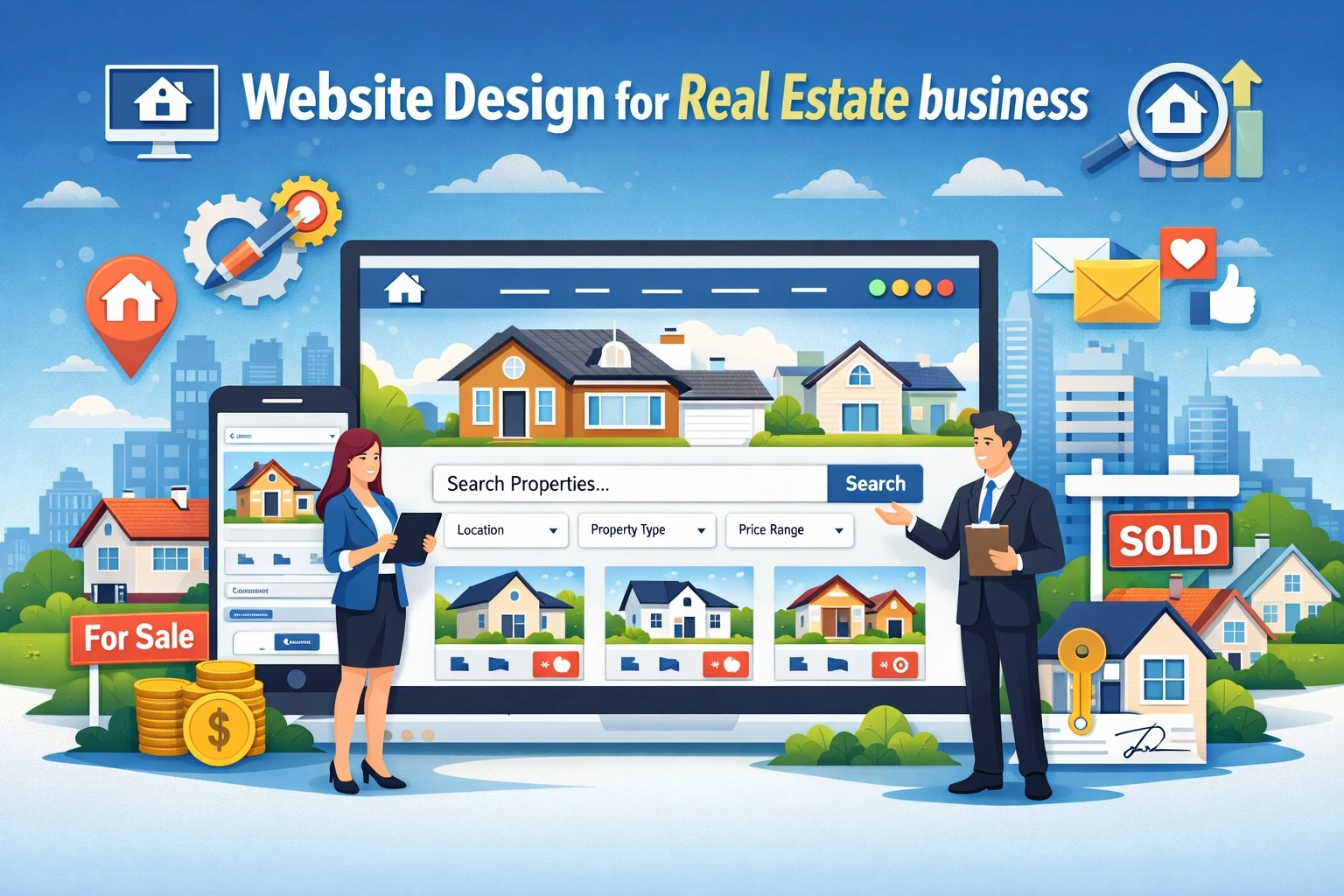
The real estate market is highly competitive, and most buyers and investors begin their property search online. While many real estate businesses invest heavily in listings, portals, and advertising, they often overlook the most important digital asset they own their website. A visually attractive website is not enough anymore. To grow consistently, real estate businesses need a lead-focused website design that turns visitors into genuine enquiries.
A lead-focused website is built with one clear purpose: guiding potential buyers, sellers, and investors to take action. Whether it is booking a site visit, requesting property details, or contacting an agent, every design element supports lead generation. Discover why every builder and agent needs a real estate website that generates leads.
1. The Problem With Traditional Real Estate Websites
Many real estate websites act like online brochures. They display property photos, long descriptions, and company information but fail to encourage user interaction. Visitors browse, scroll, and leave without submitting an enquiry.
This happens due to unclear calls to action, complicated forms, slow loading speed, and lack of trust signals. In a market where decisions are high-value and trust-driven, even small usability issues can cost businesses valuable leads. A lead-focused redesign addresses these gaps by aligning design, content, and user behavior.
2. What Makes a Website Lead-Focused for Real Estate
A lead-focused real estate website prioritizes clarity, accessibility, and trust. The homepage immediately communicates what types of properties are offered and who the business serves. Navigation is simple, allowing users to find listings, locations, and contact options without friction.
Contact forms are strategically placed and kept simple to avoid user drop-off. Mobile responsiveness ensures users browsing properties on smartphones can enquire easily. Clear call-to-action buttons guide visitors toward actions like “Schedule a Visit,” “Get Price Details,” or “Talk to an Expert.”
Trust is equally important. Client testimonials, project certifications, real photos, and transparent contact details reassure visitors that they are dealing with a credible business.
3. How Lead-Focused Design Increases Enquiries Without More Ads
A lead-focused website improves conversion rates by making it easier for visitors to take the next step. When user experience is optimized, even existing traffic starts generating more enquiries.
Better page speed reduces bounce rates. Optimized layouts improve content readability. Strong CTAs eliminate confusion. Together, these factors help convert visitors who were already interested but previously hesitant.
Additionally, SEO-friendly design ensures that search engines understand your website structure better. This results in higher-quality organic traffic, which typically converts better than paid traffic. Over time, this reduces dependency on real estate portals and expensive ad campaigns.
4. Case Study: How a Real Estate Firm Doubled Enquiries
A mid-sized real estate consultancy was receiving steady traffic through organic search and property portals. However, their website enquiry rate was below 1%, and most leads came from third-party platforms.
The website was redesigned with a lead-focused approach. Property pages were simplified with clear enquiry buttons. Forms were shortened, and click-to-call features were added for mobile users. Trust elements such as customer testimonials, RERA registration details, and completed project highlights were prominently displayed.
Within three months, the website’s conversion rate increased to over 2.4%. The number of direct enquiries doubled without increasing ad spend. More importantly, the business gained better-quality leads directly from its own website, reducing dependency on portals.
5. Why Trust and Experience Matter in Real Estate Website Design
Real estate decisions involve significant financial commitment. Buyers and investors look for signals of experience and credibility before sharing their details. A professional, well-structured website reflects expertise and builds confidence.
Design choices backed by real user behavior data and industry experience perform better than generic templates. Businesses that invest in experienced website designers benefit from a strategic approach rather than a purely visual one.
This combination of experience, technical knowledge, and user-focused design aligns with E-E-A-T principles and strengthens brand authority online.
6. Long-Term Benefits of a Lead-Focused Website
Unlike paid advertising, a lead-focused website continues to generate enquiries around the clock. It improves the effectiveness of all marketing channels—organic search, referrals, social media, and even offline promotions.
Over time, a well-designed website becomes a consistent lead-generation asset, delivering higher ROI and long-term business growth.
7. FAQs
What is a lead-focused website design for real estate?
It is a website designed specifically to convert visitors into enquiries through optimized UX, clear CTAs, and trust-building elements.
Can a website really replace real estate portals?
While portals remain useful, a strong website reduces dependency on them by generating direct, high-quality leads.
How long does it take to see results after redesign?
Most real estate businesses see improvement within 4–8 weeks, depending on traffic volume and SEO implementation.
Is mobile optimization important for real estate websites?
Yes. A large percentage of property searches happen on mobile devices, and mobile-friendly design directly impacts lead generation.
How often should a real estate website be redesigned?
Typically every 2–3 years, or sooner if conversion rates and user experience are poor.
8. Final Thoughts
A lead-focused website design is no longer just a design upgrade for real estate businesses—it is a strategic move toward sustainable growth. When your website is built to guide visitors, build trust, and encourage enquiries, it starts working as a powerful sales engine rather than a static showcase. Investing in the right design approach can significantly improve lead quality, reduce dependency on third-party platforms, and deliver long-term returns. Partnering with an experienced website design team like Pointer Soft Technologies, which understands real estate user behavior and conversion-focused design, can help you create a website that not only looks professional but consistently generates genuine property enquiries.