Websites today are no longer judged only by how they look. Users expect websites to feel responsive, intuitive, and alive. Many businesses invest heavily in design and content but still struggle with low engagement and poor conversion rates. One of the most overlooked reasons behind this problem is the absence of meaningful micro interactions.
Micro interactions are small design responses that guide users, confirm actions, and create a smooth experience. Though subtle, they play a powerful role in shaping user behavior. When used correctly, micro interactions can significantly improve website engagement and increase conversions.
Why Engagement Depends on Micro Interactions
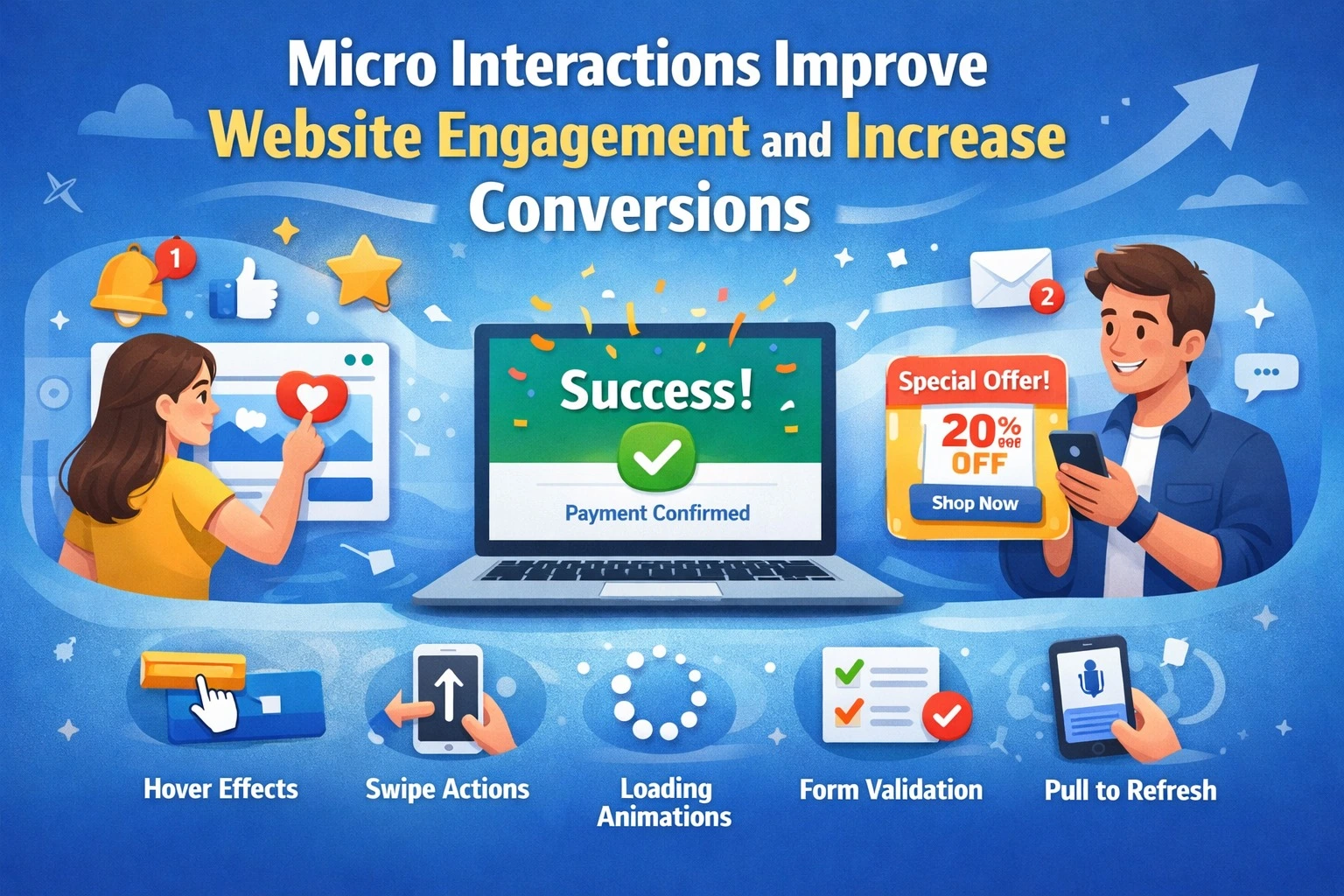
Micro interactions are purposeful design responses that appear when users take an action on a website. They respond immediately when a visitor clicks a button, fills a form, scrolls a page, or completes a task. Common examples include button hover states, real time form validation, loading animations, progress indicators, and visual confirmations after an action is completed.
Website designers use micro interactions to guide users through the interface and communicate system status clearly. Instead of leaving users guessing, micro interactions confirm that the website has received and processed their action. This instant feedback improves usability and keeps users engaged with the design.
Micro interactions do not exist for decoration. They exist to communicate. They explain what is happening on the website at every step of the user journey. When users see a button respond, a form highlight an error, or a loader indicate progress, they feel confident using the website. This confidence reduces hesitation and prevents drop offs during navigation and conversions.
From a website design perspective, micro interactions strengthen the relationship between user experience and functionality. They help designers create interfaces that feel intuitive rather than confusing. A well designed website uses micro interactions to reduce friction, simplify decision making, and guide users naturally toward actions such as form submissions, inquiries, or purchases.
How Micro Interactions Influence Conversions
Conversions happen when users trust the experience. Micro interactions build trust silently. They guide users without interrupting them.
For example, a checkout process that shows progress visually reduces anxiety. A form that validates errors in real time prevents frustration. A subtle animation after adding a product to cart reassures users that the action was successful.Each of these moments reduces cognitive load. When effort is reduced, conversions increase.
Real Case Study Micro Interactions Impact on Conversions
Client Overview
A service based business offering digital consulting services. The website had good traffic but poor conversion rates. Users were dropping off during form submissions and service inquiries.
Problem Identified
The website lacked feedback during user actions. Forms had no real time validation. Buttons had no visual response. Users were unsure whether their actions were registered.
Micro Interaction Strategy Applied
The design was updated with subtle micro interactions. Form fields displayed instant validation messages. Buttons responded visually on hover and click. A confirmation animation appeared after form submission. Loading indicators were added where processes took more than two seconds.
Results After Three Months
| Metric | Before Optimization | After Micro Interactions |
| Average session duration | 1 minute 12 seconds | 2 minutes 46 seconds |
| Bounce rate | 62 percent | 38 percent |
| Form conversion rate | 1.8 percent | 4.9 percent |
| Lead inquiries per month | 22 | 61 |
This case shows that no major content or traffic changes were needed. User experience improvements alone led to a significant rise in conversions.
Why Micro Interactions Work at a Psychological Level
Micro interactions work because they align with basic human psychology. Users naturally expect feedback when they take an action. When a website responds immediately, it confirms that the system has acknowledged the user’s intent. This confirmation reduces uncertainty and builds confidence.
Micro interactions also create a sense of control. When users see visual feedback such as button responses or progress indicators, they understand what is happening and what will happen next. This clarity lowers cognitive effort and makes decision making easier.
These small interactions also trigger positive emotional responses. Smooth animations and instant feedback make users feel rewarded for their actions. This satisfaction encourages users to continue exploring the website rather than leaving it.
Common Mistakes Businesses Make with Micro Interactions
• Ignoring micro interactions completely
When websites do not respond to user actions, visitors feel unsure whether the system has registered their input. This uncertainty increases bounce rates and reduces trust.
• Using too many animations
Excessive micro interactions distract users from key actions. Instead of guiding attention, they overwhelm visitors and interrupt the user journey.
• Adding heavy or unoptimized interactions
Large animations and poorly coded effects slow down page load speed, especially on mobile devices. Slow responses frustrate users and negatively impact conversions.
• Maintaining inconsistent interactions across pages
When buttons, forms, and navigation behave differently on each page, users lose confidence in the website and hesitate to take action.
• Focusing on decoration instead of usability
Some businesses add micro interactions only for visual appeal. If these interactions do not improve clarity or guidance, they fail to support user goals.
Measuring the Impact of Micro Interactions
Businesses measure the impact of micro interactions by tracking how users behave before and after implementing them. When micro interactions work effectively, users spend more time on the website, interact with more elements, and complete actions with less hesitation.
Website designers analyze metrics such as bounce rate, session duration, scroll depth, and form completion rate to evaluate engagement improvements. A decrease in bounce rate and an increase in time spent on key pages indicate that micro interactions guide users smoothly.
Conversion focused metrics play an equally important role. Designers measure form submissions, inquiry clicks, add to cart actions, and checkout completions to understand how micro interactions influence decision making.Heatmaps and session recordings help identify how users respond to interaction feedback in real time. These tools reveal whether users notice visual cues, follow guidance, or face friction points.
FAQs on Micro Interactions
What are micro interactions in website design
Micro interactions are small design responses that provide feedback to user actions such as clicks, form inputs, or navigation behavior.
Do micro interactions really increase conversions
Yes. They reduce friction, build trust, and guide users smoothly through conversion paths which results in higher completion rates.
Are micro interactions important for small business websites
Yes. Small businesses benefit greatly because micro interactions improve professionalism and user trust without high development costs.
Can micro interactions affect SEO
Indirectly yes. Improved engagement metrics like lower bounce rate and higher session duration positively influence SEO performance.
How many micro interactions should a website have
There is no fixed number. They should be used only where they improve clarity and user experience.
Final Thoughts
Micro interactions are small details that create big results. They transform static websites into responsive experiences that users enjoy interacting with. Engagement improves because users feel understood. Conversions increase because friction disappears.
For businesses aiming to improve website performance without chasing more traffic, micro interactions offer one of the highest return on investment improvements in modern website design. Agencies such as Pointer Soft Technologies, specialize in designing websites that combine aesthetic appeal with smart micro interactions. Our team ensures that every click, scroll, and form submission communicates clearly with your users, keeping them engaged and guiding them naturally toward conversion.