A website redesign is no longer just about changing colors or updating fonts. For small businesses in 2026, redesigning a website often means improving lead quality, mobile performance, SEO visibility, and customer trust. One of the most common questions business owners ask is simple yet critical: how much does a website redesign actually cost, and what am I paying for?
This guide breaks down website redesign costs for small businesses, explains the factors that influence pricing, and helps you decide the right budget based on your business goals.
What Is Considered a Website Redesign?
A website redesign typically involves improving the structure, design, performance, and content of an existing website. Unlike building a site from scratch, redesign focuses on upgrading what already exists while fixing gaps that affect conversions and search rankings.
For small businesses, redesign projects usually aim to improve user experience, mobile responsiveness, page speed, SEO structure, and enquiry generation rather than adding unnecessary complexity.
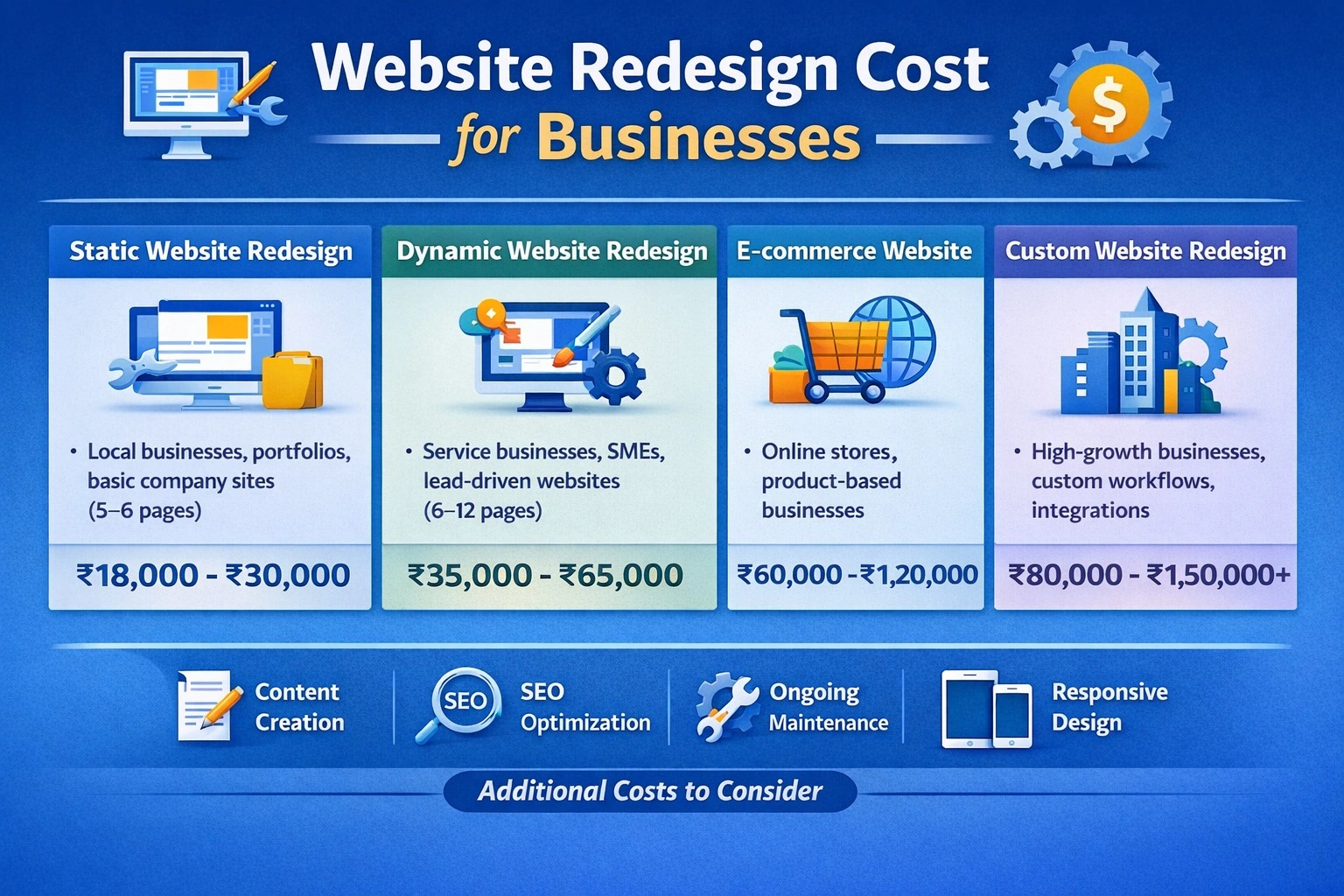
Average Website Redesign Cost for Small Businesses (2026)
| Website Type Redesign | Ideal For | Price Range |
|---|---|---|
| Static Website Redesign | Local businesses, portfolios, basic company sites (5–6 pages) | ₹18,000 – ₹30,000 |
| Dynamic Website Redesign | Service businesses, SMEs, lead-driven websites (6–12 pages) | ₹35,000 – ₹65,000 |
| E-commerce Website Redesign | Online stores, product-based businesses | ₹60,000 – ₹1,20,000 |
| Custom Website Redesign | High-growth businesses, custom workflows, integrations | ₹80,000 – ₹1,50,000+ |
The final cost depends less on the number of pages and more on what problems the redesign is solving.
Key Factors That Affect Website Redesign Pricing
One major cost factor is the current condition of your website. If the existing site has poor structure, outdated code, or slow loading speed, redesign work becomes more intensive. Another important factor is design depth. A visual refresh costs less than a UX-driven redesign that includes layout restructuring, call-to-action optimization, and mobile-first design.
Content updates also play a role. Businesses that need rewritten service pages, SEO-friendly content, or landing pages for lead generation will see higher costs, but these changes directly impact ROI. Technology choices matter as well. Redesigning on WordPress or a CMS is usually more cost-effective than rebuilding custom frameworks. Integration of enquiry forms, CRM tools, chat widgets, or analytics can add to the budget.
Finally, SEO and performance optimization significantly influence cost. A redesign that fixes broken URLs, improves Core Web Vitals, and aligns with Google’s latest guidelines requires expert involvement but protects existing rankings.
Website Redesign vs New Website: Cost Perspective
Many small businesses assume redesigning is almost as expensive as building a new site. In reality, redesign is often 30–40% more cost-efficient, provided the base platform is usable.
A redesign focuses on improving results rather than reinventing everything, making it a smarter choice for businesses already generating traffic but losing leads.
Case Study: Small Business Website Redesign ROI
A local service business approached a redesign after noticing steady traffic but very few enquiries. Their old website was slow, non-responsive on mobile, and lacked clear calls to action.
The redesign project included layout restructuring, mobile optimization, speed improvement, and conversion-focused content. The total redesign cost was approximately ₹65,000.
Within three months of launch, the business experienced a noticeable increase in enquiry quality, improved Google visibility for local keywords, and a significant reduction in bounce rate. The redesign cost was recovered within the first few months through new leads alone, proving that redesign is an investment, not an expense.
How to Budget Smartly for Website Redesign
Instead of asking for the cheapest redesign, small businesses should focus on outcome-based budgeting. A slightly higher upfront investment often delivers better long-term returns through higher conversions and reduced dependency on paid ads.
Choosing a professional agency that understands business goals, user behavior, and SEO ensures the redesign supports growth rather than just aesthetics.
EEAT: Why Expertise Matters in Website Redesign
Google increasingly evaluates websites based on Experience, Expertise, Authoritativeness, and Trust (EEAT). A professional redesign improves these signals by enhancing content clarity, navigation, performance, and credibility.
Websites redesigned by experienced teams tend to perform better in search rankings, retain users longer, and convert more consistently. This makes expertise-driven redesign especially important for small businesses competing in crowded markets.
Frequently Asked Questions (FAQ)
How often should a small business redesign its website?
Most small businesses should consider a redesign every 3–4 years or when the website no longer supports current business goals.
Can I redesign my website without losing SEO rankings?
Yes, if done correctly. Proper URL handling, content preservation, and technical SEO practices prevent ranking loss during redesign.
Is website redesign cheaper than building a new website?
In most cases, yes. Redesign leverages existing structure and content, reducing development effort and cost.
How long does a website redesign take?
A typical small business redesign takes 3–6 weeks, depending on complexity and content requirements.
Should redesign include SEO and conversion optimization?
Absolutely. A redesign without SEO and CRO often fails to deliver measurable business results.
Final Thoughts
The cost of website redesign for small businesses in 2026 depends on strategy, not just design. A well-planned redesign improves trust, visibility, and lead generation while offering strong ROI.
If your website looks outdated, loads slowly, or fails to convert visitors into enquiries, investing in a professional redesign is one of the smartest growth decisions you can make. Companies like Pointer Soft Technologies focus on redesigns that balance cost, performance, and long-term business impact—helping small businesses turn websites into reliable sales assets.