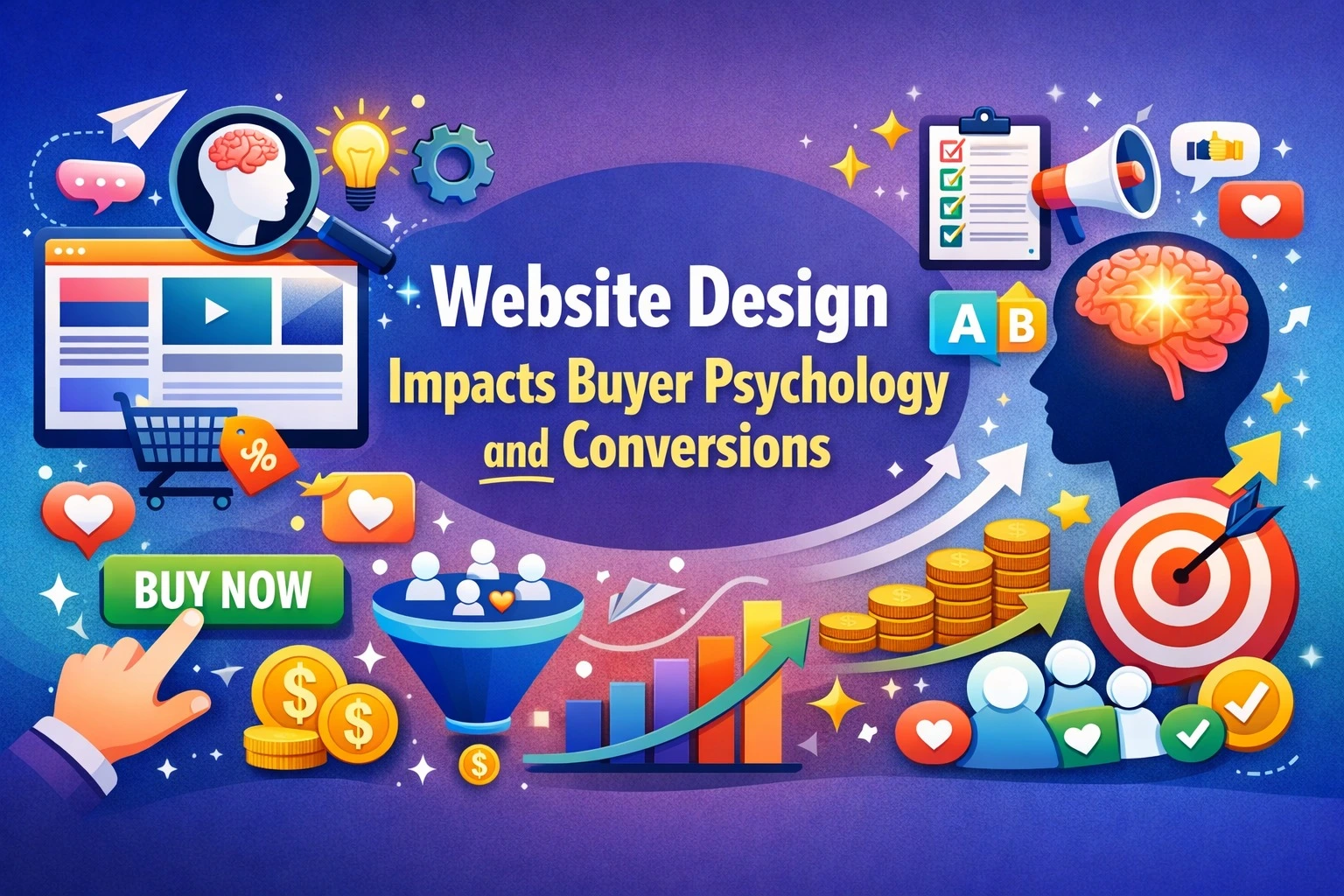
Most buyers don’t decide logically first. They decide emotionally then justify their decision with logic. Your website design plays a silent but powerful role in that decision making process.
Many businesses assume website design is about colours, layouts, or trends. In reality, design directly influences how safe, confident, and motivated a visitor feels. Within seconds of landing on a page, users form opinions that affect whether they stay, trust, and convert or leave without a trace. Understanding how website design impacts buyer psychology is essential if your goal is not just traffic, but real conversions.
1. First Impressions Shape Buyer Decisions Instantly
Research consistently shows that users form an impression of a website in under a second. That impression is emotional, not rational. Before reading a single word, visitors subconsciously assess whether the site feels credible, modern, and trustworthy.
A cluttered layout, outdated visuals, or inconsistent branding triggers doubt. Even if the service is excellent, poor presentation creates a perception of risk. Buyers associate visual order with professionalism and chaos with unreliability. This is why design is not decoration, it is persuasion.
| Website Design Element | Psychological Impact on Buyer | Conversion Effect |
|---|---|---|
| First visual impression | Instant emotional judgement (trust or doubt) | Stay or bounce within seconds |
| Clean layout & spacing | Sense of control and professionalism | Higher engagement |
| Visual hierarchy | Reduces confusion and mental load | Clear decision-making |
| Colour balance | Emotional comfort or anxiety | Positive mood improves action |
| Typography clarity | Readability builds credibility | More content consumption |
| Mobile-friendly design | Feeling of reliability and care | Higher mobile enquiries |
2.Visual Hierarchy Guides the Buyer’s Mind
Good website design doesn’t overwhelm visitors. It guides their attention naturally.
Visual hierarchy helps buyers understand what matters most without thinking. Headings, spacing, contrast, and layout structure direct the eye toward key messages and actions. When hierarchy is weak, visitors feel mentally fatigued. Confusion increases, attention drops, and exits happen quickly. From a psychological standpoint, clarity reduces cognitive load. The easier it is to understand your offer, the safer it feels to proceed.
3. Trust Signals Are Psychological Anchors
Trust is the foundation of conversion. Buyers hesitate when trust signals are missing, even if the website looks attractive.
Effective website design reinforces trust by making key elements visible and accessible. These include testimonials, client logos, certifications, real photos, and transparent contact details. When these elements are integrated naturally into the design ,not hidden away, they act as psychological anchors. Visitors don’t consciously analyze trust signals. They feel them. And feelings drive action.
4. Colour, Typography, and Emotion
Colour psychology influences mood and expectation. While no colour guarantees conversions, poor colour choices can harm them.
Muted, balanced colours often communicate stability and professionalism. Aggressive or clashing colours increase anxiety. Typography also matters more than most realize. Clean, readable fonts reduce friction, while decorative or inconsistent fonts reduce credibility.
5. Case Study: Design Changes That Improved Conversions Without More Traffic
A mid-sized service business approached us after struggling with low enquiry rates. Their website ranked reasonably well and attracted visitors, but conversions were below industry benchmarks.
The problem wasn’t SEO it was psychology. The website had too many competing elements, inconsistent spacing, weak visual hierarchy, and no clear focal point. Testimonials existed but were buried deep inside pages. Calls to action were present but visually passive.
We didn’t change the brand or messaging drastically. Instead, we simplified the layout, improved spacing, strengthened headings, highlighted testimonials near decision points, and made the primary call-to-action visually clear. Within six weeks, enquiry rates increased significantly , without increasing traffic or advertising spend.
The improvement came from reduced friction and increased psychological comfort.
6. Mobile Design Strongly Influences Buyer Confidence
A large percentage of buyers experience your website first on a mobile device. If the mobile design feels cramped, slow, or difficult to navigate, trust erodes instantly. Mobile-friendly design isn’t just about responsiveness. It’s about prioritization. Buyers should be able to understand what you offer, why they should trust you, and how to contact you all without zooming or searching.
Poor mobile design signals neglect. Buyers associate neglect with risk.
7. Why Simplicity Converts Better Than Complexity
Many websites fail because they try to say too much at once. Multiple offers, banners, pop-ups, and messages compete for attention.
From a psychological perspective, choice overload leads to inaction. Buyers freeze when unsure what to do next.
High-converting websites simplify decisions. They present one primary action at a time and remove unnecessary distractions. Simplicity builds confidence because it feels controlled and intentional.
8. How Website Design Supports SEO and EEAT
Design and content are deeply connected. A well-structured design improves engagement metrics like time on site and bounce rate, which indirectly support SEO.
More importantly, design helps demonstrate EEAT principles. Experience is shown through real visuals and case examples. Expertise is reinforced by clean presentation and clear explanations. Authority comes from consistency, while trust grows through transparency.
Search engines and users both reward websites that feel credible and useful.
9. Practical Design Elements That Influence Conversions
Certain design elements consistently impact buyer psychology when used thoughtfully:
Clear visual hierarchy that guides attention
A strong visual hierarchy helps visitors understand what to look at first, second, and next. Headings, spacing, and contrast guide the eye toward important messages and actions. When information flows logically, buyers feel less confused and more confident moving forward.
Consistent branding and spacing
Consistency in colours, fonts, and spacing creates a sense of stability and professionalism. When design elements feel aligned and balanced, the website appears more reliable. Inconsistent visuals, on the other hand, create subtle doubt and reduce trust.
Prominent, reassuring calls to action
Calls to action should stand out without feeling aggressive. Clear, well-placed buttons with reassuring language help buyers understand the next step. When the action feels simple and low-risk, visitors are more likely to engage.
Visible trust indicators near decision points
Testimonials, reviews, certifications, or client logos placed near forms and contact buttons reinforce credibility at the exact moment of decision. These trust indicators reduce hesitation and reassure buyers that they are making a safe choice. These elements work together to reduce hesitation and encourage action.
10. FAQs
How does website design affect buyer psychology?
Website design influences how safe, confident, and comfortable a buyer feels. These emotions strongly impact trust and conversion decisions.
Can good design really increase conversions?
Yes. Improved design reduces confusion, builds trust, and guides users toward action, often increasing conversions without more traffic.
Is website design more important than content?
Design and content work together. Design attracts and reassures, while content convinces and explains.
Does mobile design affect buyer trust?
Absolutely. Poor mobile experience creates frustration and signals unreliability, reducing conversions.
How often should a business update its website design?
Minor improvements should be ongoing. Major redesigns are typically needed every few years based on user behavior and business goals.
Can design improvements help SEO?
Indirectly, yes. Better design improves engagement metrics and supports EEAT signals, which help search performance.
What design mistakes hurt conversions the most?
Cluttered layouts, unclear calls to action, poor readability, and missing trust signals.
Who should handle conversion-focused website design?
Professionals who understand user psychology, business goals, and digital behavior not just aesthetics.
11. Final Thoughts
Website design is not about making things look pretty. It’s about making buyers feel confident enough to act.
Every layout choice, colour, font, and spacing decision communicates something to your visitor often before they read a single word. Businesses that understand this psychological impact convert more visitors without relying on aggressive marketing. Agencies such as Pointer Soft Technologies, design websites that don’t just attract attention but guide buyer decisions through clarity, trust, and experience-driven strategy. When design supports psychology, conversions follow naturally.