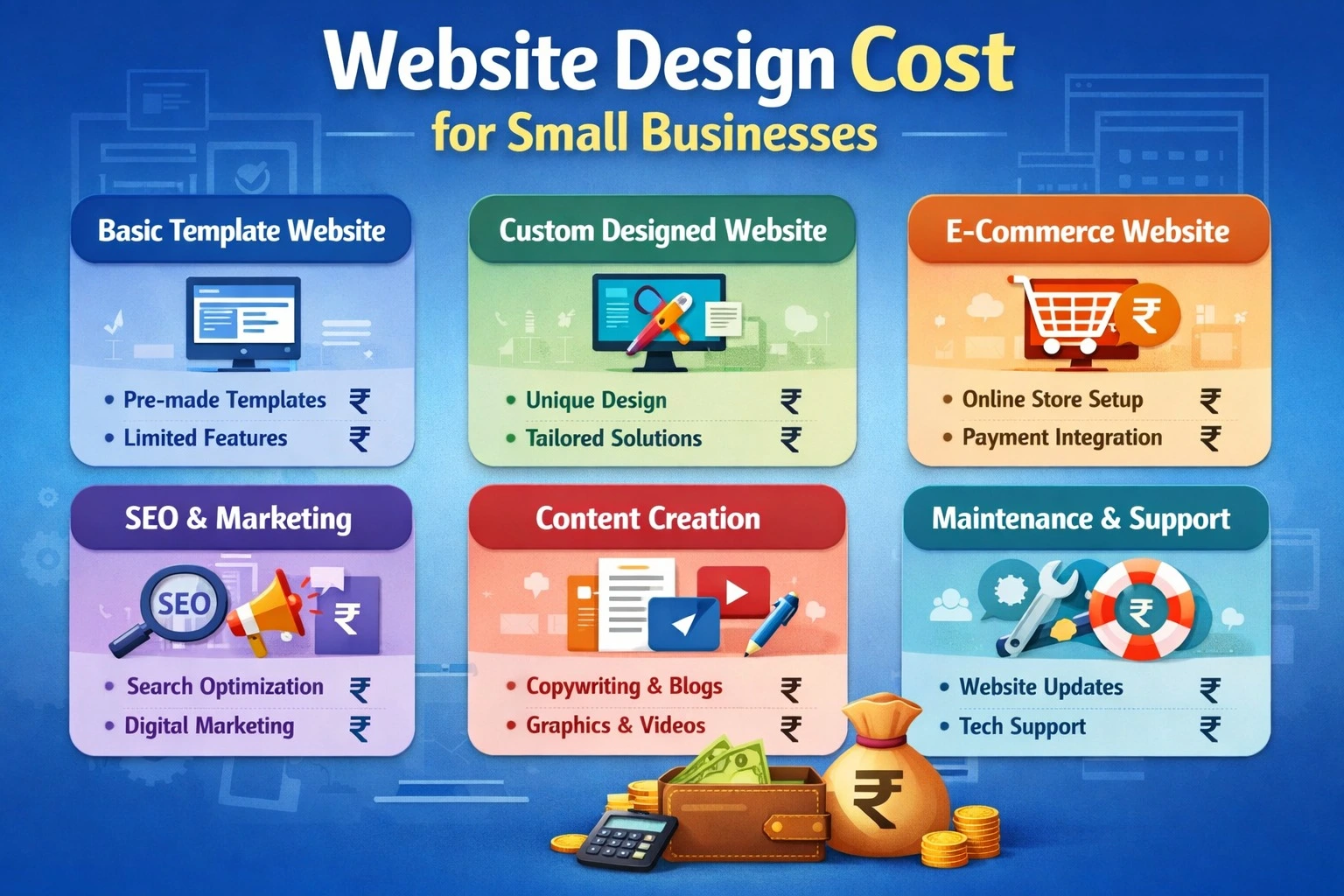
Most small businesses in India don’t fail because they lack customers. They fail because their website silently pushes customers away. A common reason is underestimating website design cost. Business owners often choose the cheapest quote, assuming all websites work the same. Months later, the website looks outdated, doesn’t generate enquiries, loads slowly on mobile, and damages credibility.
Understanding the average cost of website design for small businesses in India is not about spending more it’s about spending right in 2026.
Why Website Design Cost Varies So Much in India
There is no single fixed price for a business website because the purpose of a website has changed. Earlier, websites were digital brochures. Today, they are expected to attract traffic, build trust, and generate enquiries.
The cost depends on how much strategy goes into the website. A basic site focuses only on appearance. A professional website focuses on structure, content flow, mobile experience, speed, SEO readiness, and conversion elements. That difference alone explains why one website costs ₹8,000 and another costs ₹40,000 even if both have five pages.
Average Website Design Cost for Small Businesses in India (2026)
Based on current market trends and real small business requirements, here is a realistic pricing overview:
| Website Type | Average Cost (₹) | Suitable For |
| Basic Static Website | 8,000 – 15,000 | Very small or local businesses |
| WordPress Business Website | 15,000 – 30,000 | Service-based businesses |
| Custom Lead-Generation Website | 30,000 – 60,000 | Growth-focused SMBs |
| Small eCommerce Website | 35,000 – 80,000 | Online sellers |
| Advanced Custom Website | 80,000+ | Scaling businesses |
For most small businesses in India, the ideal investment range lies between ₹20,000 and ₹40,000 if the goal is enquiries, credibility, and long-term performance.
Why Cheap Websites Cost More in the Long Run
A low-cost website often looks fine initially, but problems start appearing after launch. Pages load slowly, forms stop working, mobile users struggle to navigate, and Google rankings never improve. The website becomes a passive expense instead of a business tool.
In many cases, businesses end up redesigning their website within a year. This means paying twice once for the cheap website, and again for a professional one. The real cost, therefore, is not the price tag, but the lost opportunities.
Over time, these issues start affecting visibility on Google. Search engines prioritise fast, mobile-friendly, and well-structured websites. Cheap websites are rarely built with proper SEO foundations, clean code, or performance optimisation. As a result, rankings stagnate, traffic remains low, and the website fails to attract quality leads. What was meant to be a growth asset slowly turns into a silent liability.
Another major drawback is the lack of scalability. As the business grows and needs new pages, integrations, or features, cheap websites often cannot support these changes. Businesses are then forced to compromise on functionality or rely on frequent patchwork fixes that create more instability. Maintenance becomes reactive instead of planned, increasing both downtime and frustration.
In many cases, small businesses realise within a year that their website is not delivering results. They are left with no option but to redesign the entire site from scratch. This means paying twice first for a low-cost website that didn’t perform, and again for a professional website built with strategy and long-term goals in mind.
Real Case Study: Small Investment, Big Difference
A small manufacturing business in India invested ₹6,000 in a basic website created by a freelancer. Despite steady traffic, they received almost no enquiries for over eight months. The issue wasn’t demand it was poor website structure, no clear call-to-action, and zero optimisation for mobile users.
They later invested ₹35,000 in a professionally designed WordPress website focused on enquiry generation. Within three months, the business saw a threefold increase in enquiries and improved trust from new clients. The website started working like a salesperson instead of a visiting card.
This shift highlights how website cost directly impacts business outcomes.
Ongoing Costs Most Small Businesses Ignore
Website design is not a one-time task. To perform well in 2026, websites need regular updates, security checks, and performance optimisation. Hosting, domain renewal, maintenance, and backups are recurring costs that protect the original investment.
On average, small businesses should budget ₹5,000 to ₹15,000 per year for basic website maintenance. Skipping this step is one of the main reasons websites stop delivering results over time.
How Much Should a Small Business Really Spend?
If your website exists only for presence, a lower budget may work. But if you expect enquiries, leads, or sales, under-investing is risky. A website meant to generate business should be treated like a long-term asset, not a one-time expense.
A business-generating website requires thoughtful planning, strong design structure, clear messaging, mobile optimisation, fast loading speed, and conversion-focused elements. These factors do not come cheaply, but they directly influence how visitors perceive your brand and whether they take action. Without them, even steady traffic fails to turn into meaningful business.
In 2026, a professionally designed website is no longer optional , it is essential for trust, visibility, and growth.
FAQs: Average Cost of Website Design for Small Businesses in India
What is the average cost of website design for small businesses in India?
The average cost ranges from ₹15,000 to ₹40,000, depending on features, design quality, and business goals.
Can a small business build a website under ₹10,000?
Yes, but such websites are usually basic and lack SEO, speed optimisation, and lead-generation capabilities.
Is WordPress suitable for small business websites?
Yes. WordPress is flexible, cost-effective, and scalable when developed professionally.
How often should a small business redesign its website?
Every two to three years, or earlier if the website stops generating enquiries.
Does website cost include SEO?
Basic on-page SEO may be included, but ongoing SEO is usually a separate investment.
Final Thoughts
The average cost of website design for small businesses in India should be viewed through the lens of value, not price. A well-designed website builds trust, attracts the right audience, and converts visitors into enquiries. A cheap website, on the other hand, quietly holds business growth back. At Pointer Soft Technologies, the focus has always been on creating websites that don’t just look good but are built to perform helping small businesses turn their online presence into a measurable business asset rather than a recurring problem.