Many businesses struggle to maintain consistent Google rankings even after investing heavily in keywords, backlinks, and technical fixes. Traffic rises for a short time, then drops suddenly after an update, leaving brands confused and frustrated. This happens because search engines no longer rank websites based only on keyword matching or page-level signals. Google now evaluates who you are as a brand, what you represent in your industry, and how trustworthy your business appears across the web.
This fundamental shift has made Entity SEO one of the most effective strategies for achieving sustainable search rankings, long-term brand trust, and higher conversion rates. Instead of treating each page as an isolated asset, Google connects your content, brand mentions, business data, and expertise into a single entity within its Knowledge Graph. When your brand is clearly defined and consistently reinforced, Google gains confidence in showing your website more frequently and more prominently for relevant searches.
Businesses that depend solely on traditional SEO techniques often experience unstable rankings because their visibility is tied to individual keywords and algorithm-sensitive tactics. In contrast, brands that invest in Entity SEO build topical authority and brand credibility that compound over time. As Google’s trust in the entity grows, rankings become more stable, content indexes faster, and users are more likely to click and convert. Entity SEO shifts the focus from short-term keyword wins to long-term search dominance built on trust and authority.
What Is Entity SEO
Entity SEO focuses on helping Google recognize your business as a real, authoritative entity rather than viewing your website as a loose collection of individual webpages. An entity can represent a brand, company, person, service, or organization that Google can clearly identify, understand, and connect within its Knowledge Graph. This recognition allows Google to place your business within a broader context, linking it to relevant topics, services, and industry relationships.
When Google understands your entity clearly, it gains confidence in the accuracy and reliability of your content. Instead of evaluating each page in isolation, Google evaluates your brand as a whole. This trust leads to more consistent rankings across multiple keywords, faster indexing of new content, and greater stability during algorithm updates. Your brand is no longer dependent on individual page performance alone.
As entity recognition grows stronger, Google also begins to surface your brand more frequently across different search features. This includes richer search results, enhanced listings, sitelinks, FAQs, and in some cases, Knowledge Graph visibility. These placements increase brand exposure, improve click-through rates, and reinforce user trust. Over time, Entity SEO transforms search visibility from short-term keyword rankings into long-term brand authority that compounds and supports sustained organic growth.
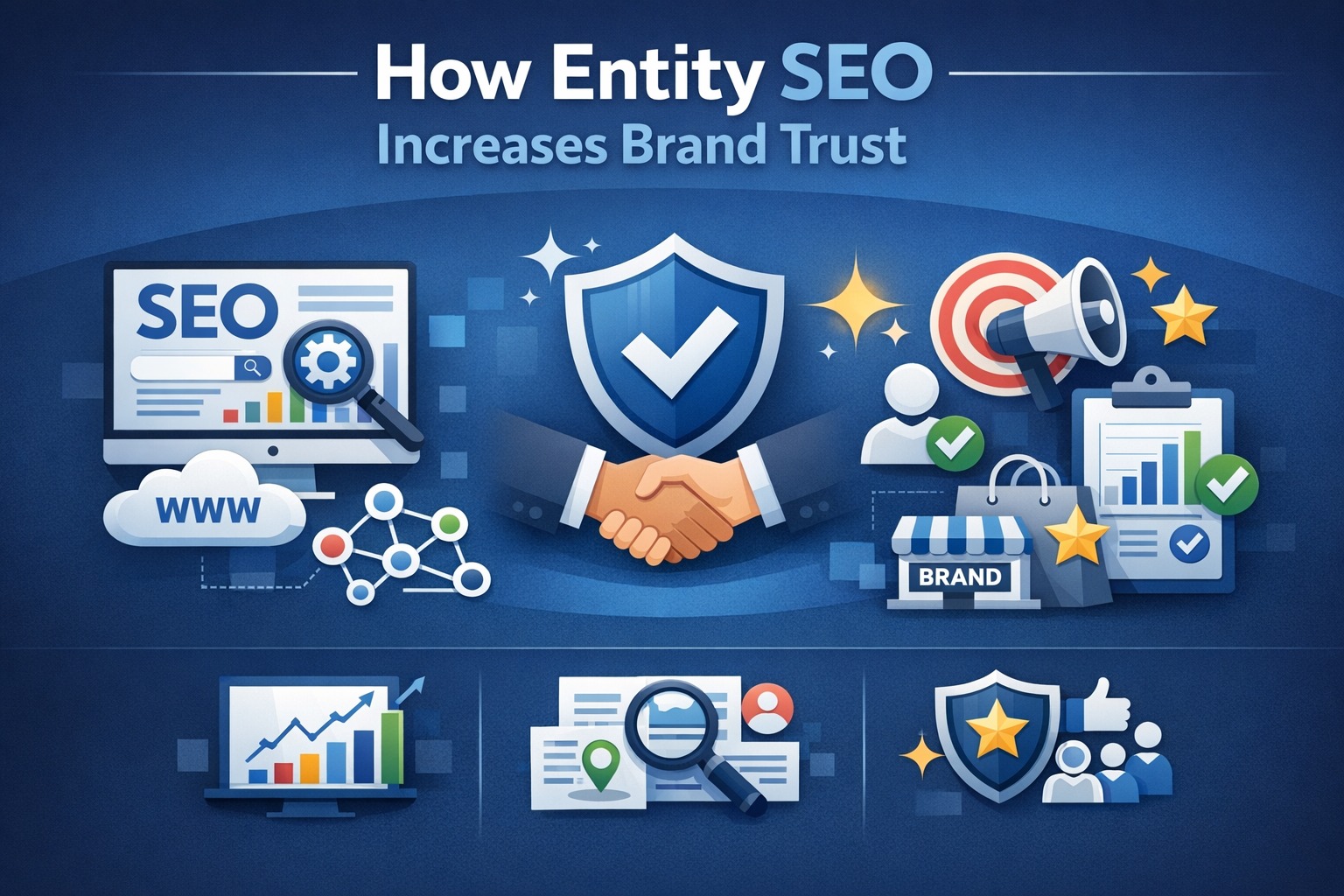
How Entity SEO Builds Brand Trust
Trust is the foundation of Google’s ranking system, and Entity SEO plays a key role in strengthening that trust. It helps Google clearly understand who your brand is, what services you offer, and how credible your business is in its industry. When your brand sends consistent signals across your website, structured data, business listings, and authoritative mentions, Google no longer sees your site as just another webpage. It recognizes your business as a reliable and established entity.
As this clarity increases, Google’s evaluation process changes. Instead of only asking whether a page is relevant to a keyword, Google considers whether your brand is trustworthy enough to answer the user’s query accurately. This confidence allows Google to rank your content more consistently, even in competitive searches. Over time, this trust translates into better visibility, stable rankings, and stronger user confidence, which ultimately drives higher engagement and conversions.
How Entity SEO Improves Search Rankings
Traditional SEO often depends heavily on backlinks and exact-match keywords. Entity SEO works differently. Once Google understands your entity, it begins associating your brand with specific topics and services. This association allows your pages to rank even when they do not target exact keywords.
Ranking Impact Comparison
| SEO Factor | Traditional SEO | Entity SEO |
| Keyword dependency | High | Low |
| Backlink reliance | Heavy | Moderate |
| Ranking stability | Volatile | Stable |
| Topical authority | Page-based | Brand-based |
| Algorithm update impact | High risk | Low risk |
Entity-based rankings survive core updates better because Google ranks brands, not tricks.
How Entity SEO Increases Conversions
Entity SEO increases conversions by building trust before a user ever visits your website. When Google clearly understands your brand as a trusted entity, it presents your business more confidently across search results. Users repeatedly see your brand name in relevant searches, which creates familiarity and reduces hesitation when they finally click through.
As entity signals strengthen, your website begins attracting more qualified traffic. Instead of visitors who arrive only because of a keyword match, Entity SEO brings users who already associate your brand with authority and expertise. These users have clearer intent, spend more time on the site, and are more likely to take action because they trust the source of the information.
Entity SEO also improves how your brand appears in search results. Rich results such as FAQs, sitelinks, and enhanced listings increase visibility and credibility. When users see detailed and trustworthy search appearances, they feel more confident choosing your business over competitors, which directly improves click-through and conversion rates.
Another key factor is message consistency. Entity SEO ensures that your brand positioning, services, and value proposition remain consistent across content, profiles, and search features. This consistency eliminates confusion and reassures users that they are engaging with a legitimate business. Clear messaging leads to faster decision-making and higher conversions.
Over time, Entity SEO strengthens branded search demand. As more users search for your brand by name, conversions naturally rise because branded traffic converts at a much higher rate than non-branded traffic. By turning visibility into trust and trust into action, Entity SEO creates a direct and measurable impact on conversion growth.
Real Case Study: Service Business Using Entity SEO
Background
A mid-sized website designing company in India struggled with unstable rankings and low-quality leads. The website ranked for some keywords but failed to convert visitors into inquiries.
Entity SEO Actions Taken
The company clarified its brand entity using structured data, unified brand mentions across platforms, strengthened topical authority around website design and SEO, and aligned content with entity relationships rather than keywords alone.
Results After 6 Months
| Metric | Before Entity SEO | After Entity SEO |
| Organic traffic | 18,000/month | 32,000/month |
| Keyword rankings (Top 10) | 42 | 118 |
| Conversion rate | 1.4% | 3.6% |
| Brand search queries | Low | +210% |
| Lead quality | Mixed | High intent |
The biggest improvement came from brand trust. Prospects arrived already convinced, reducing sales friction.
Why Entity SEO Outperforms Keyword SEO Long-Term
Keyword SEO chases demand. Entity SEO creates demand.When Google recognizes your brand as an authority, it starts ranking your content faster, even for new topics. This advantage compounds over time.
Entity SEO also protects your business from over-optimization penalties, thin content issues, and backlink volatility. Google prefers brands that demonstrate expertise, authority, and trustworthiness across multiple signals.
How to Start with Entity SEO
Starting with Entity SEO is about creating clarity and trust around your brand so search engines can clearly understand and validate your business. Instead of focusing on many tactics, it works best when you concentrate on a few core areas and execute them consistently.
- Define Your Brand Entity Clearly
Your brand identity should be unambiguous. Use a single business name, clearly state your services, and maintain the same business information across your website and online presence. This helps Google recognize your brand as a distinct and legitimate entity. - Ensure Consistency Across All Platforms
Google relies heavily on consistency to build trust. Your website, Google Business Profile, social media pages, and business listings should all reflect identical business details. Any mismatch can weaken entity signals and delay recognition. - Use Structured Data to Support Your Entity
Structured data helps search engines understand your brand in a precise, machine-readable format. Implementing proper schema markup allows Google to connect your business name, services, and location within its Knowledge Graph more effectively. - Build Topical Authority Through Content
Instead of creating isolated keyword-based pages, publish content that strengthens your expertise around core services. Each piece of content should reinforce your brand’s authority and clearly connect back to your main entity. - Strengthen Brand Mentions and Trust Signals
Entity SEO grows stronger when your brand is mentioned on reputable and relevant websites. These mentions validate your credibility and help Google confirm your authority, even when backlinks are limited.
When these core elements align, Entity SEO creates a strong foundation for long-term rankings, brand trust, and sustainable organic growth.
Frequently Asked Questions
What is the main goal of Entity SEO?
The goal is to help Google recognize your business as a trusted, authoritative entity so it can rank your content more confidently.
Is Entity SEO only for big brands?
No. Small and mid-sized businesses benefit the most because Entity SEO levels the playing field against competitors with larger backlink profiles.
How long does Entity SEO take to show results?
Most businesses see noticeable improvements in 3–6 months, with compounding benefits over time.
Does Entity SEO replace traditional SEO?
Entity SEO enhances traditional SEO. Keyword optimization still matters, but entity optimization determines long-term success.
Can Entity SEO improve local SEO?
Yes. Entity SEO strengthens Google Business Profile trust, local pack visibility, and branded search presence.
Final Thoughts
Entity SEO represents a fundamental shift in how search engines evaluate websites and determine long-term visibility. Search engines no longer reward businesses simply for targeting keywords or publishing isolated pages. Companies that focus only on keyword-based SEO often find themselves in constant competition, chasing rankings that fluctuate with every algorithm update. This approach leads to short-term gains but rarely delivers lasting stability.
In contrast, brands that invest in building strong entity authority position themselves for sustainable success. When search engines clearly understand a brand’s identity, expertise, and trustworthiness, rankings become more consistent and visibility expands across multiple search touchpoints. This trust-driven approach not only improves organic rankings but also increases user confidence, leading to higher engagement and stronger conversion performance over time. Entity SEO allows growth to scale naturally, without relying on aggressive or risky tactics.
If your goal is long-term growth rather than temporary traffic spikes, Entity SEO is no longer optional. It has become the foundation of modern search visibility, helping brands establish credibility, protect rankings, and convert search demand into real business results. For businesses looking to implement Entity SEO correctly and build lasting digital authority, working with an experienced team like Pointer Soft Technologies can provide the strategic direction and execution needed to turn entity recognition into measurable growth.