The healthcare industry has changed significantly over the last decade, and 2026 marks a new era for hospitals and medical facilities. With patients relying heavily on digital platforms for medical decisions, hospitals must adopt modern lead generation strategies to attract new patients and remain competitive. Today’s patients expect a seamless digital experience, reliable information, and personalized care. Hospitals that embrace these expectations will see stronger patient engagement and increased appointment bookings.
This article explores the top lead generation techniques hospitals should focus on in 2026 for consistent growth and improved patient acquisition.
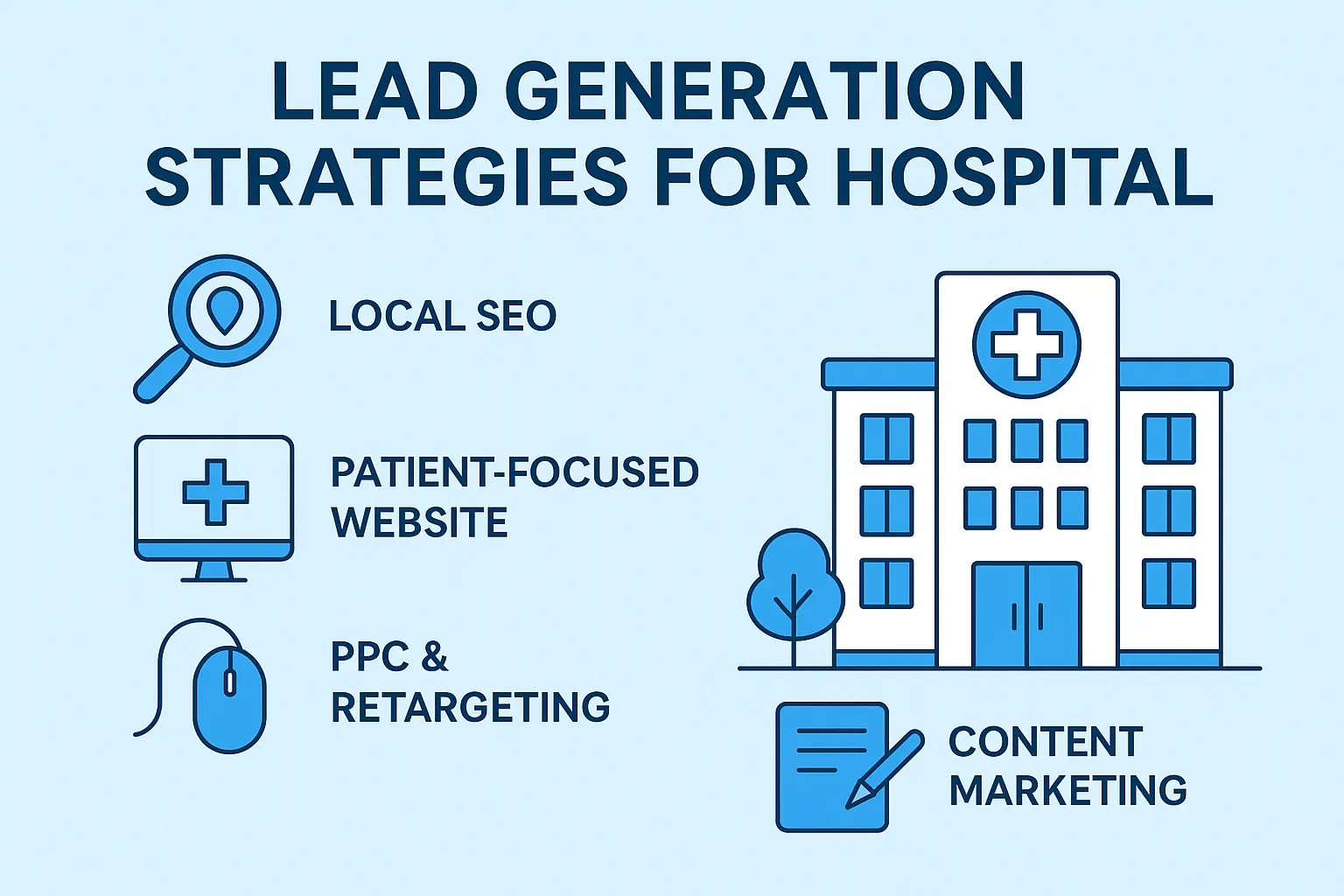
1. Enhancing Local Search Visibility Through SEO
When individuals search for healthcare services, they typically look for options within their city or neighborhood. That makes Local SEO one of the most powerful tools for hospitals. It ensures that when someone searches terms such as “emergency hospital near me” or “best orthopedic doctor in [city],” your facility appears among the top results.
Improving search rankings requires optimized service pages, location-based keywords, and accurate business information across directories. Reviews on platforms like Google also influence search visibility. Additionally, voice search continues to grow as patients use smart devices to look up care needs. Creating conversational and question-based content helps hospitals appear in voice-generated results.
2. Creating a Patient-Centered Website Experience
A hospital’s website often creates the first impression of its medical services. Therefore, it must be easy for visitors to find important information such as specialties, doctor profiles, treatment options, and contact numbers. A strong website also includes a simple online appointment system that helps convert visitors into patients instantly.
Speed, mobile responsiveness, accessibility for disabled users, and clear navigation contribute to trust and convenience. Modern patients will leave a website quickly if it feels outdated or confusing, making design and usability key factors in lead generation.
3. Paid Advertising for High-Intent Patient Leads
Search engines and social platforms offer precise targeting options that help hospitals reach the right audience at the right time. Paid campaigns using Google Ads or Meta Ads are effective for promoting high-value services like cardiology, maternity care, and cosmetic procedures.
Retargeting ads can remind people who previously checked hospital services online but did not act. Since they already showed interest, these leads are more likely to convert when they revisit your digital channels.
4. Content Marketing that Builds Trust and Authority
In healthcare, trust is the foundation of every decision. Patients want reassurance before choosing a doctor or hospital. Educational content is an excellent way to showcase expertise and guide people toward medical help.
Useful content formats include blogs explaining symptoms and treatments, video messages from doctors, recorded webinars, success stories, and downloadable health resources. Informative content not only improves search rankings but also positions your hospital as a reliable source of medical knowledge. This emotional confidence often leads patients to take the next step and book an appointment.
5. Marketing Automation and CRM for Personalized Engagement
Hospitals handle a large number of inquiries daily, and without proper management, many leads go unnoticed. A healthcare CRM system helps track every patient inquiry and nurture relationships throughout their care journey. Automation tools can send timely email reminders, follow-ups, and health check notices based on patient interests.
Personalized communication shows patients that the hospital truly cares about their well-being. This approach increases lead conversions while improving long-term patient loyalty.
6. Reputation Management and Patient Reviews
Before trusting a hospital, most people first look for social proof. Online ratings and reviews influence patient choices more than traditional referrals. Hospitals should actively encourage satisfied patients to share their feedback online, especially on Google Business Profile and healthcare-specific review portals.
Responding to reviews, whether positive or negative, demonstrates professionalism and transparency. A strong online reputation can significantly boost lead generation as potential patients feel more confident about the hospital’s credibility.
7. More Meaningful Patient Connection Through Social Media
Hospital marketing is no longer limited to posters or pamphlets. Social media offers a powerful platform for humanizing healthcare. Introducing doctors, sharing success stories, and posting preventive healthcare advice builds a strong bond with the community.
Live question sessions with specialists, updates on medical technology upgrades, and awareness campaigns can increase patient engagement. High engagement often translates into inquiries and appointment requests.
8. Telehealth as a Growth Opportunity
Telehealth expanded rapidly in recent years and continues to be a strategic tool for attracting new patients. Hospitals that provide convenient online consultations can reach people who may not be able to visit in person. Telehealth also serves as an entry point that encourages future in-hospital treatments when needed. In 2025, integrating telemedicine into the patient journey is not just a trend but a competitive necessity.
Case Study: How a Multispeciality Hospital Increased Patient Leads by 68% in 6 Months
Client Background
A leading multispeciality hospital based in a Tier-1 Indian city approached us with the goal of improving its online patient acquisition. The hospital offered services including cardiology, orthopedics, emergency care, and general medicine. Although the hospital had a functional website, it was not generating consistent online appointment bookings. The management wanted to reduce dependency on walk-ins and offline referrals and build a sustainable digital lead generation system.
Challenges Identified
After conducting a detailed audit, the following key issues were identified:
- Poor visibility for high-intent keywords like “hospital near me” and department-specific searches
- Low organic traffic
- Weak local SEO presence
- High Google Ads cost per lead
- Inefficient website conversion structure
Strategy Implemented
1. SEO & Content Optimization
We conducted in-depth keyword research targeting patient search behavior. Service-specific landing pages were optimized for departments such as cardiology and orthopedics. FAQ sections were added to address common patient concerns, improving both relevance and search visibility. Content was structured with proper heading hierarchy and internal linking to strengthen topical authority.
2. Local SEO Enhancement
The hospital’s Google Business Profile was fully optimized with accurate service categories, images, patient reviews, and regular updates. Local citations were corrected to ensure consistent NAP (Name, Address, Phone Number) details across directories. This significantly improved visibility in local map searches.
3. Conversion Rate Optimization
The website design was refined to increase appointment bookings. Improvements included:
- Prominent “Book Appointment” buttons
- Click-to-call functionality on mobile devices
- Simplified appointment forms
- WhatsApp inquiry integration
- Display of doctor profiles and patient testimonials
These changes improved user trust and reduced friction in the booking process.
4. Paid Campaign Optimization
Google Ads campaigns were restructured to target high-intent keywords. Department-specific ad groups were created, and remarketing campaigns were introduced to re-engage visitors who had previously interacted with the site.
Performance Results
Website Traffic Growth
| Metric | Before Campaign | After 6 Months | Growth |
|---|---|---|---|
| Monthly Website Sessions | 2,400 | 8,200 | +242% |
| Organic Traffic | 880 | 5,700 | +547% |
Lead Generation Improvement
| Metric | Before | After | Improvement |
|---|---|---|---|
| Appointment Form Submissions | 74 | 198 | +168% |
| Phone Call Inquiries | 90 | 312 | +247% |
| Cost Per Lead | ₹1,400 | ₹520 | -63% |
Key Success Factors
The campaign succeeded due to:
- Strong local SEO strategy
- Service-focused landing pages
- Clear conversion pathways
- Data-driven advertising optimization
- Continuous performance monitoring
Frequently Asked Questions (FAQ)
1. Why is lead generation important for hospitals?
Hospitals operate in a highly competitive environment. Lead generation ensures a steady flow of new patients, supports revenue growth, and helps hospitals reach more people who need medical care.
2. What is the most effective digital strategy for hospital lead generation in 2026?
A combination of Local SEO, online reviews, and a user-friendly website generally delivers the strongest results. These strategies build trust and make it easy for patients to contact the hospital.
3. Can hospitals use social media for patient acquisition?
Yes. Social media platforms provide a direct way to connect with the community, share health information, promote services, and encourage inquiries from potential patients.
4. How does telehealth contribute to lead generation?
Telehealth allows patients to begin treatment from the comfort of their homes. This convenience builds trust and often leads to ongoing medical care at the hospital.
5. What role does content marketing play in healthcare marketing?
Educational content helps people understand their health concerns and highlights the hospital’s expertise. It attracts more website traffic and converts visitors into patients by building trust.
Final Thoughts
As digital transformation continues to reshape patient behavior, hospitals must adopt updated strategies that meet modern expectations. Lead generation in 2025 is not just about attracting new patients but also providing them with a seamless and dependable experience from their first online search to their in-person care. By focusing on search visibility, online reputation, patient-friendly technology, and personalized communication, hospitals can thrive in an increasingly competitive healthcare landscape.
Partnering with experienced healthcare marketing specialists, like Pointer Soft Technologies , can make the process easier by providing expert support in SEO, content creation, automation, and patient acquisition strategies tailored to medical institutions.