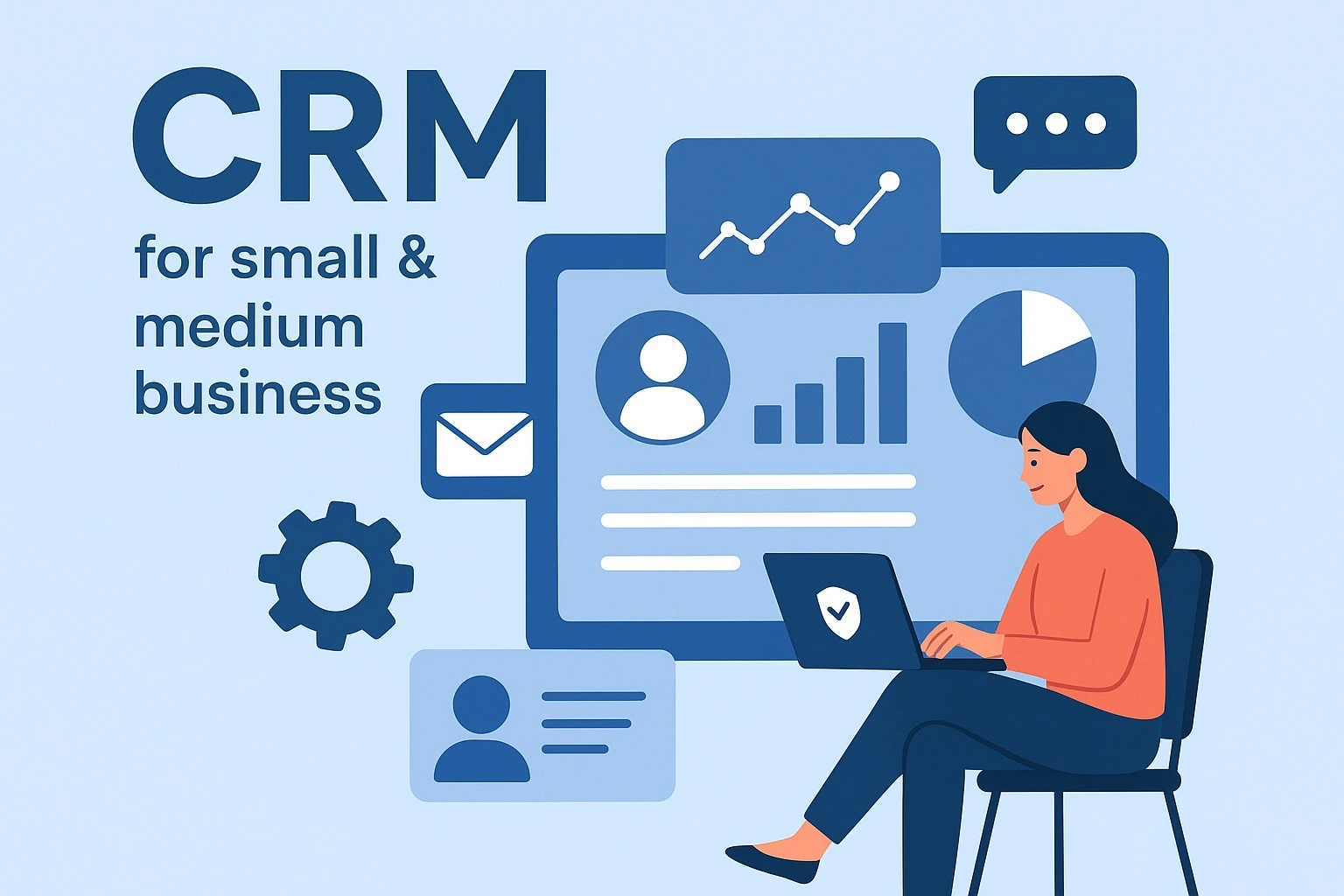
Small and medium businesses operate in a competitive environment where managing customers efficiently is the key to long-term success. As a business grows, handling leads, customer interactions, follow-ups, sales activities, and support requests manually becomes difficult. A Customer Relationship Management (CRM) system helps streamline these tasks, strengthen customer relationships, and support faster business growth.
A CRM enables businesses to work more efficiently, improve customer satisfaction, and increase revenue using a single platform. This makes it a powerful growth accelerator for small and medium-sized businesses.
What is CRM?
CRM stands for Customer Relationship Management. It is a centralized software platform used to store customer information, track leads, manage communications, monitor sales pipelines, and analyze performance.
Instead of storing customer data in multiple spreadsheets, emails, and chat apps, CRM brings everything into one place. Any team member can quickly view customer details, communication history, upcoming tasks, and the status of ongoing deals without confusion.
Benefits of CRM for Small & Medium Businesses
1. Better Lead Management and Faster Conversions
Many potential customers are lost due to missed follow-ups. CRM sends automated reminders and helps teams track each lead’s progress through the sales pipeline. This ensures timely follow-ups and significantly increases lead conversion rates.
2. Stronger Customer Experience
A positive customer experience helps with retention and referrals. CRM keeps a record of all customer interactions, making communication more personalized, accurate, and efficient. It allows your team to offer quick support because customer details are always available when needed.
3. Team Collaboration and Transparency
With a CRM, all departments share one platform. Sales, marketing, and support teams have a clear view of every customer. This reduces duplication of work, improves accountability, and helps everyone stay aligned with business goals.
4. Data-Driven Decision Making
CRM dashboards and reports provide real-time insights. Business owners and managers can track sales performance, identify best-selling products or services, evaluate lead sources, and predict future revenue. Decisions become strategic and backed by data.
5. Automation for Higher Productivity
CRMs automate repetitive tasks such as follow-up emails, assigning leads, tracking overdue tasks, and generating performance reports. This helps teams save time and focus more on closing deals and serving customers.
6. Better Customer Retention
Retaining existing customers is more profitable than acquiring new ones. CRM helps track renewals, collect feedback, and run loyalty-driven campaigns. Businesses can reach out at the right time with the right offers, improving retention and long-term revenue.
7. Scalable and Affordable
Modern CRM systems are budget-friendly and designed to scale with business growth. As your team and customer base increase, you can upgrade features and add more users without any disruption.
Who Should Use a CRM?
CRM is highly useful for:
• Real estate companies
• Educational institutes and coaching centers
• Doctors, clinics, and healthcare providers
• Travel agencies and tour operators
• Manufacturers and distributors
• Marketing and IT companies
• Retail and e-commerce businesses
• Local service providers
Any business that handles leads, customers, or sales operations can benefit from CRM adoption.
Signs Your Business Needs a CRM Right Now
1. Customer Data is Scattered Everywhere
If your customer information is stored across Excel sheets, emails, phone contacts, and WhatsApp messages, it becomes difficult to find details when needed. This leads to confusion, delays, and communication gaps. A CRM centralizes everything in one secure place.
2. Follow-Ups Get Missed Frequently
Missing just one follow-up can cost a valuable customer. Without an automated system that reminds your team about calls, meetings, or responses, leads slip away. CRM ensures timely follow-ups to improve conversion rates.
3. No Visibility Into Sales Activities
If you cannot clearly track how many leads are active, who is handling them, and which deals are close to closing, your sales process lacks transparency. CRM offers a complete view of the sales pipeline so you can take proactive actions.
4. Dependence on Manual Work
Too much manual entry, reporting, and data tracking slows productivity and leaves room for errors. CRM automates repetitive tasks like assigning leads, updating status, and sending follow-up messages, allowing teams to focus on selling.
5 .Customers Complain About Support Delays
When your team struggles to recall customer history or provides repeated information, customer trust declines. CRM provides quick access to all past interactions, making support responses faster and more accurate.
6 .Sales Forecasting Feels Like Guesswork
Without proper analytics, predicting future revenue or identifying top-performing channels becomes difficult. CRM provides real-time performance insights so business decisions are based on data, not assumptions.
7. Collaboration Becomes Difficult as Team Grows
When more people are involved in sales and service, coordination becomes complex. CRM keeps everyone aligned by allowing shared access to customer data, tasks, and updates with role-based permissions.
Key Features of a Good CRM
• Lead capture and tracking
• Sales pipeline management
• Email, SMS, and WhatsApp communication
• Performance tracking and analytics
• Workflow and follow-up automation
• Reminder and task management
• Multi-user access with role-based permissions
These features help businesses scale operations smoothly and manage larger customer volumes without increasing workload.
Frequently Asked Questions (FAQ)
1. Is CRM suitable for small businesses?
Yes. CRM is especially beneficial for small businesses because it helps scale operations with limited resources.
2. Is CRM difficult to learn?
Most modern CRM tools are simple, user-friendly, and require minimal training.
3. Can CRM integrate with WhatsApp and email?
Yes, many CRM systems support WhatsApp and email integration for easier communication.
4. Is CRM expensive for SMBs?
No. There are cost-effective CRM solutions designed specifically for small and medium businesses.
5. How does CRM increase revenue?
By improving follow-ups, preventing lead leaks, enhancing customer satisfaction, and offering performance insights.
Final Thoughts
A CRM is an essential business tool that directly impacts sales, customer relationships, and long-term growth. Small and medium businesses that adopt CRM early experience better efficiency, stronger brand reputation, and faster scaling.
If you are looking for a CRM that fits your business processes and helps you grow without complexity, Pointer Soft Technologies can assist you with the right CRM solution customized for your needs.