Customer acquisition costs continue to rise across ecommerce and service industries. Paid ads are becoming expensive, competition is increasing, and attracting new customers now requires higher budgets and constant optimization. Yet many businesses overlook a critical problem customers purchase once and never return. This cycle increases dependency on ads and reduces overall profitability.
Smart brands focus on increasing repeat purchases because retention directly improves margins and stabilizes revenue. A well-designed website does more than attract visitors. It builds trust, simplifies buying decisions, and creates a seamless experience that makes customers comfortable coming back again and again.
If your website generates one-time buyers but struggles with retention, design could be the missing link. Many businesses focus only on driving traffic but overlook the impact of checkout friction, poor user experience, and a high cart abandonment rate. When customers abandon their carts during the first purchase, the likelihood of a repeat order decreases significantly.
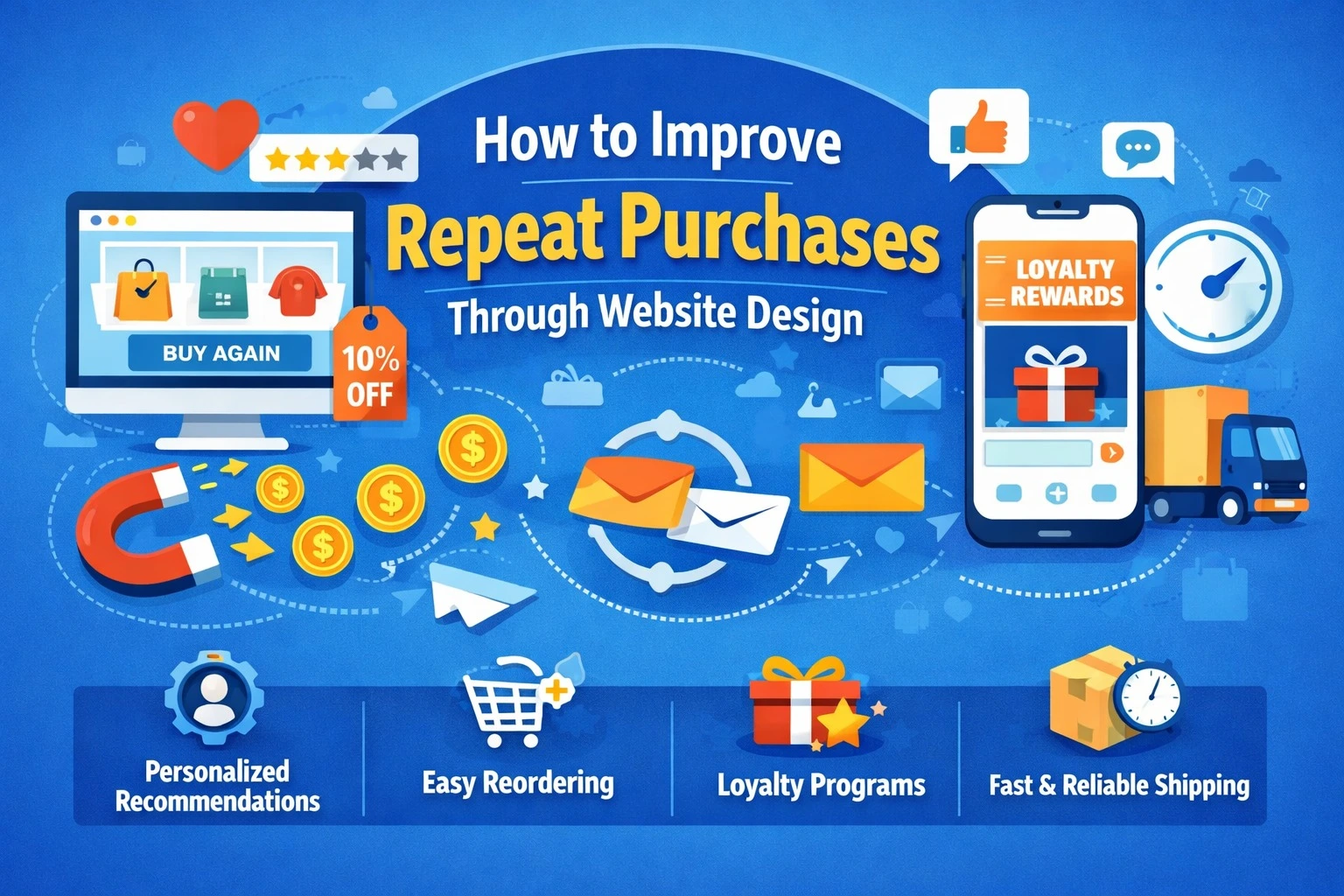
Reducing cart abandonment in ecommerce websites requires optimizing checkout flow, improving page speed, simplifying forms, and building stronger trust signals. Addressing checkout abandonment not only recovers lost revenue but also strengthens long-term customer retention and repeat purchase behavior. Now, let’s explore how you can improve repeat purchases through strategic website design and build a sustainable retention-focused growth strategy.
Why Repeat Purchases Matter
Returning customers spend more, convert faster, and require less persuasion. Research consistently shows that increasing retention by even 5% can significantly boost profits. Repeat buyers already trust your brand. Your website’s design must reinforce that trust and remove friction from future purchases.
Design influences:
- User experience
- Brand perception
- Emotional connection
- Purchase convenience
1. Simplify the User Experience (UX)
Returning customers expect familiarity. They do not want to relearn navigation or struggle to find products again. If your website feels effortless, they return confidently. If it feels complicated, they leave. User experience directly affects repeat purchase behavior. When customers complete a purchase smoothly the first time, they associate your brand with ease and reliability. Focus on improving core usability elements such as:
- Clear and logical navigation
- Fast-loading pages
- Strong mobile responsiveness
- Prominent search functionality
- Easy “Buy Again” or reorder option
2. Personalize the Shopping Experience
Personalization creates emotional connection. When customers see products that match their preferences, they feel understood. Smart design integrates behavioral data into the interface. It adapts based on browsing history, past purchases, and location. For example, Amazon uses predictive recommendations to display relevant products immediately on the homepage and product pages. This approach significantly increases repeat orders.
You can implement personalization by:
- Showing recently viewed products
- Displaying recommended items based on purchase history
- Creating personalized homepage banners
- Sending users to customized landing pages from emails
3. Build Strong Trust Signals Across the Website
Trust determines whether customers return. Design must communicate transparency and credibility at every step. Many websites hide return policies and customer support details in the footer. That reduces confidence. Instead, integrate trust signals directly into the buying journey. Key elements to highlight:
- Clear return and refund policies
- Verified customer reviews
- Secure payment icons
- Transparent shipping timelines
- Real testimonials with images
4. Improve the Post-Purchase Experience
Retention begins after checkout. A customer’s second purchase depends heavily on how the first experience ended.Your website should provide a structured and helpful post-purchase dashboard. When customers log in, they should instantly see order status, purchase history, and easy reorder options.Brands like Apple create seamless ecosystems. Customers can manage devices, track orders, upgrade products, and buy accessories effortlessly. This integrated experience drives repeat purchases.
Enhance post-purchase design by including:
- Order tracking system
- Simple return management
- Refill or subscription reminders
- One-click reordering
- Reward point visibility
5. Integrate Loyalty Programs Into the Core Design
Many brands create loyalty programs but fail to showcase them properly. If customers cannot see their progress, they forget about rewards.Design should make rewards visible and motivating.
You can improve engagement by:
- Displaying reward points at the top of the account dashboard
- Adding a visual progress bar toward next reward
- Showing exclusive member discounts
- Highlighting referral benefits
6. Optimize Checkout for Returning Customers
Returning customers expect speed. They already trust your brand. They do not want to fill long forms again. Checkout optimization should focus on minimizing effort. Important improvements include:
- Saved payment methods
- Auto-filled address fields
- One-click purchase options
- Minimal checkout steps
7. Maintain Strong Brand Consistency
Consistent design strengthens brand recall. When customers recognize your colors, typography, and layout instantly, they feel comfortable returning. Nike maintains strong visual identity across digital platforms. This consistency reinforces brand trust and loyalty. Your website should maintain:
- Unified color palette
- Professional product photography
- Clear typography hierarchy
- Consistent messaging tone
Real Case Study: Increasing Repeat Purchases for an Indian Skincare Brand
Background
An Indian direct-to-consumer skincare brand experienced strong traffic growth but weak retention. Their repeat purchase rate stood at only 19%. Customers bought once but did not return.
Identified Problems
The audit revealed several design-related issues:
- Confusing navigation structure
- No product recommendations
- Hidden loyalty program
- No reorder option
- Slow mobile checkout
Design Improvements Implemented
The company redesigned its website with retention as the primary goal. They:
- Simplified navigation and product categories
- Integrated AI-based recommendations
- Made loyalty rewards visible in the dashboard
- Added one-click “Buy Again” feature
- Optimized mobile checkout speed
Results After 6 Months
| Metric | Before Redesign | After Redesign | Growth |
|---|---|---|---|
| Repeat Purchase Rate | 19% | 34% | +78% |
| Average Order Value | ₹1,450 | ₹1,920 | +32% |
| Customer Lifetime Value | ₹3,800 | ₹6,150 | +61% |
| Checkout Abandonment | 68% | 41% | -39% |
| Mobile Conversion Rate | 1.2% | 2.4% | +100% |
Key Insight
The biggest improvement came from simplifying reordering and making rewards visible. Customers returned because the experience felt smooth and rewarding. This case clearly shows that website design directly impacts retention metrics.
Common Design Mistakes That Reduce Repeat Purchases
1. Overcomplicate Navigation
When customers cannot find products quickly, frustration increases. Complex menus, too many categories, unclear labels, or hidden filters make browsing difficult. Returning customers expect familiarity and speed. If they struggle to locate items they previously purchased, they may leave and choose a competitor with simpler navigation. Clear structure reduces cognitive load and improves repeat buying behavior.
2. Ignore Mobile Optimization
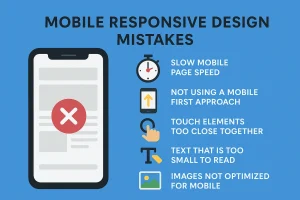
A large percentage of repeat purchases happen on mobile devices. If your website loads slowly, has small buttons, poor spacing, or broken layouts on smartphones, users abandon the purchase. Returning customers especially expect fast and seamless mobile checkout. Mobile friction directly reduces retention and conversion rates.
3. Hide Customer Support
Customers feel more confident when help is easily accessible. If support details are buried in the footer or hard to find, trust decreases. Returning buyers may have questions about orders, returns, or product usage. Visible chat support, contact numbers, and clear return policies build reassurance. Confidence increases the likelihood of repeat purchases.
4. Fail to Personalize Content
When customers return and see generic content, the experience feels disconnected. Personalized recommendations, recently viewed items, and relevant offers make users feel recognized. Without personalization, customers must search again from scratch. Relevance increases engagement. Engagement increases repeat buying.
5. Add Unnecessary Checkout Steps
Long forms, forced account creation, repeated data entry, and multiple confirmation pages create friction. Returning customers expect faster checkout, not longer processes. Each extra step increases the risk of abandonment. A streamlined checkout with saved details and minimal fields improves repeat purchase rates significantly.
Final Thoughts
Repeat purchases do not happen randomly. They result from deliberate strategy and thoughtful website design. When businesses focus only on attracting new visitors, they miss the bigger opportunity retaining the customers they already earned.
Strategic design simplifies the user experience, removes friction, and builds familiarity. When customers navigate effortlessly, find relevant products quickly, and complete checkout without obstacles, they associate your brand with convenience. That positive experience encourages them to return. A website should not just attract customers. It should make coming back easier than leaving. If you want to transform your website into a retention-driven growth engine, strategic design planning is essential. At Pointer Soft Technologies, we help businesses build conversion-focused and retention-optimized websites that support long-term growth not just short-term traffic.
FAQs
1. How does website design influence repeat purchases?
Website design affects usability, trust, and convenience. When customers find products easily and reorder quickly, they are more likely to return.
2. What design feature improves repeat purchases the most?
The “Buy Again” or one-click reorder feature often delivers immediate retention improvement because it reduces effort for returning customers.
3. How long does it take to improve repeat purchase rate?
Most businesses see measurable changes within three to six months after implementing retention-focused design updates.
4. Is personalization necessary for small ecommerce websites?
Yes. Even basic personalization like “Recently Viewed Products” increases engagement and repeat visits.
5. Does mobile optimization impact repeat purchases?
Absolutely. Many returning customers purchase through mobile devices. Slow or poorly optimized mobile design reduces retention significantly.