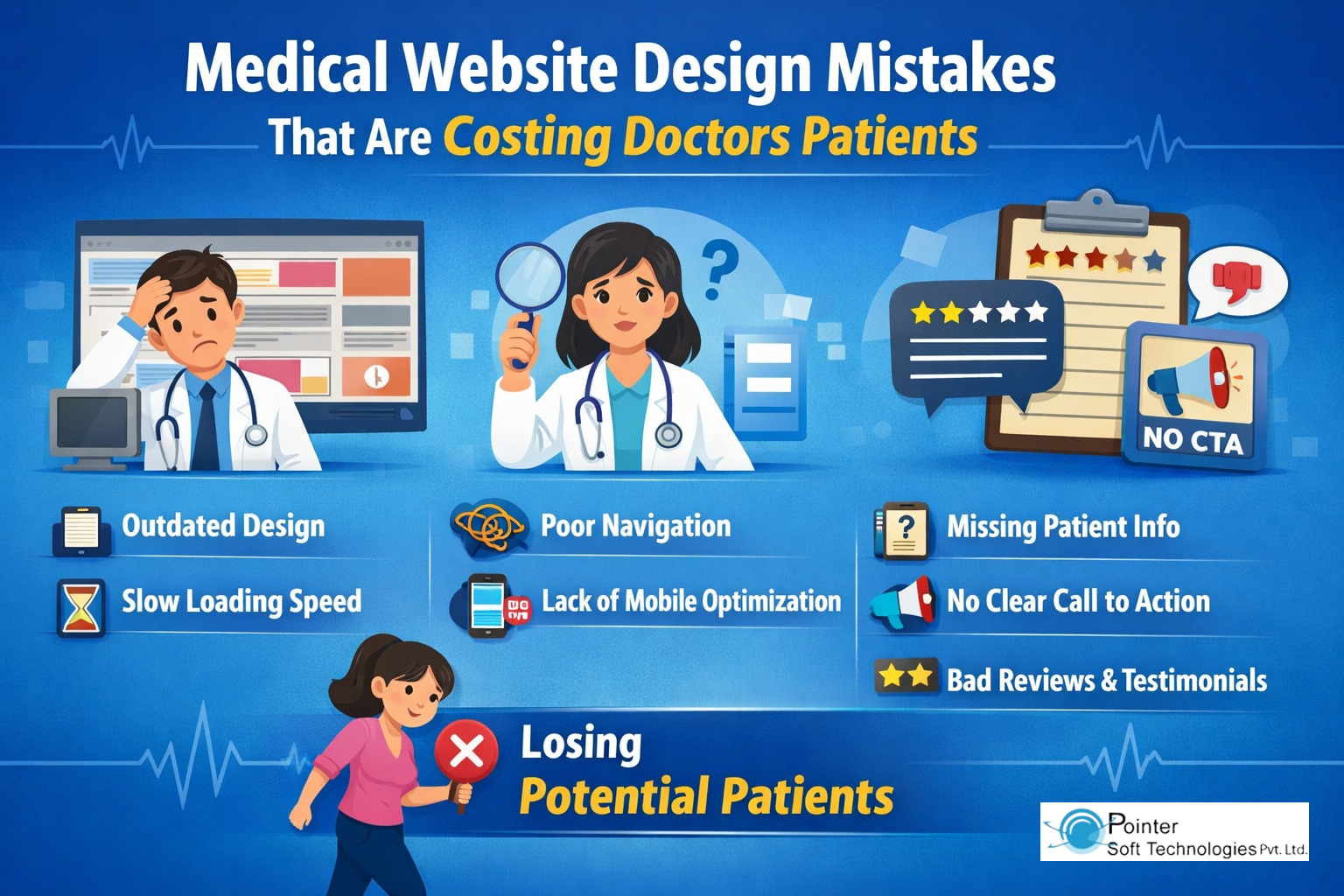
A patient searches for your clinic, visits your website, and leaves within seconds. No call happens, no appointment gets booked, and trust is never established. This pattern is more common than most doctors realize. In healthcare, your website serves as your first impression, a digital receptionist, and a key conversion tool. If it underperforms, patients quickly switch to competitors who seem more reliable and convenient. This is why investing in a professional doctor and healthcare website design becomes essential to attract, engage, and convert patients effectively.
Let’s break down the 9 biggest medical website design mistakes that silently reduce your patient inquiries and how to fix them.
1. Outdated Website Design
An outdated website does more damage than most doctors expect. When a patient lands on your site and sees an old layout, inconsistent colors, low-quality images, or cluttered sections, they subconsciously question your professionalism. In healthcare, perception matters a lot—patients often associate your digital presence with the quality of care you provide. A design that looks like it hasn’t been updated in years signals neglect and lack of innovation. Modern patients expect clean layouts, intuitive navigation, and visually appealing sections that guide them smoothly through services, doctor profiles, and booking options. Updating your website with a modern UI/UX design, consistent branding, proper spacing, and high-quality visuals instantly improves credibility and encourages users to stay longer.
2. Not Mobile-Friendly
Most patients today search for doctors on their smartphones, often in urgent situations. If your website is not mobile-friendly, you are likely losing a majority of potential patients before they even read your content. A non-responsive website forces users to zoom in, scroll excessively, or struggle with buttons that are too small to tap. This creates frustration and leads to immediate exits. A mobile-optimized website adapts seamlessly to different screen sizes, ensuring that text is readable, buttons are easily clickable, and navigation remains smooth. It also improves your Google rankings, as search engines prioritize mobile-first indexing. By investing in responsive design, you not only enhance user experience but also significantly increase engagement and conversions.
3. Slow Website Speed
Speed is critical in the digital experience, especially in healthcare where users are often searching with urgency. A slow-loading website can drive visitors away within seconds, even before your homepage fully appears. Common causes include uncompressed images, excessive scripts, poor hosting, and lack of optimization. Patients expect instant access to information if your site takes more than a few seconds to load, they will move on to a faster competitor. Improving website speed involves compressing images, using optimized code, enabling browser caching, and choosing reliable hosting services. A faster website not only reduces bounce rates but also improves search engine rankings and overall user satisfaction.
4. No Clear Call-to-Action (CTA)
A well-designed website should guide visitors toward a specific action, such as booking an appointment or contacting the clinic. When there is no clear call-to-action, patients feel lost and unsure about what to do next. Many medical websites make the mistake of hiding contact details or not highlighting booking options prominently. This leads to missed opportunities, even if the visitor is genuinely interested. Effective CTAs like “Book Appointment,” “Call Now,” or “Schedule Consultation” should be clearly visible, ideally placed above the fold and repeated across the website. Using contrasting colors and strategic placement ensures that patients can take action instantly without confusion.
5. Lack of Trust Elements
Trust is one of the most important factors influencing a patient’s decision. If your website does not provide enough reassurance, visitors may hesitate to choose your clinic. Missing elements such as patient testimonials, doctor credentials, certifications, awards, or affiliations can make your website feel incomplete and unreliable. Patients want to know who they are trusting with their health. Adding authentic reviews, showcasing qualifications, highlighting years of experience, and displaying recognitions can significantly boost confidence. Including real patient stories or before-and-after results (where applicable) further strengthens credibility and encourages conversions.
6. Poor Content Structure
Even if your website has valuable information, poor content structure can make it difficult for users to consume it. Large blocks of text without headings, lack of spacing, and unorganized sections overwhelm visitors and reduce readability. Patients typically scan content rather than reading every word, so your website should present information in a clear and digestible format. Using proper headings (H1, H2, H3), bullet points, short paragraphs, and highlighted key information improves user experience. A well-structured website helps patients quickly find what they need whether it’s services offered, doctor details, or contact information leading to better engagement and lower bounce rates.
7. No Local SEO Optimization
Most patients search for healthcare services using location-based queries like “doctor near me” or “clinic in [city].” If your website is not optimized for local SEO, you are missing out on highly targeted traffic. Without location keywords, Google Business integration, and local schema markup, your website may not appear in relevant search results. This means potential patients in your area may never discover your services. Optimizing for local SEO involves adding city-specific keywords, creating location pages if necessary, embedding maps, and ensuring your Google Business Profile is updated. These efforts improve your visibility in local searches and drive more nearby patients to your clinic.
8. Complicated Appointment Process
A complicated or time-consuming booking process can discourage patients from completing their appointment. Many websites require users to fill out long forms, navigate multiple pages, or wait for manual confirmation, which creates unnecessary friction. In today’s fast-paced environment, patients prefer quick and simple solutions. A streamlined appointment system with minimal fields, easy navigation, and instant confirmation can significantly improve conversion rates. Integrating options like WhatsApp booking, click-to-call buttons, or real-time scheduling tools makes the process more convenient. The easier it is to book, the more likely patients are to follow through.
9. No SEO Optimization
A visually appealing website is ineffective if it does not attract visitors. Without proper SEO (Search Engine Optimization), your website may not appear in search engine results, making it invisible to potential patients. Common issues include lack of keyword optimization, missing meta titles and descriptions, and absence of relevant content. SEO ensures that your website ranks for important search queries related to your services. By optimizing each page with targeted keywords, creating informative blog content, and maintaining technical SEO standards, you can improve your visibility and attract consistent organic traffic. Over time, this leads to increased patient inquiries and sustainable growth for your practice.
Case Study: Impact of Website Redesign
| Factor | Before Improvement | After Improvement | Result |
| Website Speed | 6.5 seconds | 1.8 seconds | ↓ Bounce rate by 45% |
| Mobile Optimization | Not responsive | Fully responsive | ↑ Mobile users by 60% |
| Appointment Conversion | 2% | 8% | 4X increase in bookings |
| Patient Inquiries | 20/month | 85/month | Massive lead growth |
| Trust Signals | None | Reviews + certifications | ↑ Patient trust & engagement |
Why Fixing These Mistakes Matters
Every small issue on your website creates friction. In healthcare, trust + convenience = conversions. When your website removes confusion and builds confidence, patients are far more likely to take action. Here’s what each benefit really means:
Increase Patient Inquiries
When your website is fast, easy to navigate, and has clear “Book Appointment” or “Call Now” buttons, patients don’t hesitate. They quickly understand your services and take the next step. Removing friction points like slow speed or confusing layout directly increases calls, form submissions, and bookings.
Build Credibility Instantly
Patients judge your expertise within seconds of visiting your website. A clean design, professional layout, patient reviews, and visible credentials create immediate trust. When your website looks reliable, patients feel more confident choosing your clinic over others.
Improve Google Rankings
Search engines like Google prioritize websites that are fast, mobile-friendly, and well-structured. Fixing design and technical issues helps your site rank higher in search results. Better rankings mean more visibility, which leads to more patient traffic without paid ads.
Automate Appointment Bookings
A well-designed website works like a 24/7 receptionist. With features like online booking forms, WhatsApp integration, or click-to-call buttons, patients can schedule appointments anytime without needing to call manually. This not only saves time but also ensures you never miss potential leads even outside clinic hours.
Frequently Asked Questions (FAQ)
1. Why is website design important for doctors?
A professional website builds trust and helps patients choose your clinic over competitors. It also improves online visibility and bookings.
2. How much does a medical website cost?
Costs vary depending on features, but a quality website is an investment that generates consistent patient leads.
3. How can I get more patients from my website?
Focus on fast speed, mobile design, SEO, and clear CTAs like “Book Appointment”.
4. Do doctors really need SEO?
Yes. Most patients search online before visiting a clinic. Without SEO, your website won’t appear in search results.
5. What is the most important feature in a doctor’s website?
Easy appointment booking combined with trust signals like reviews and credentials.