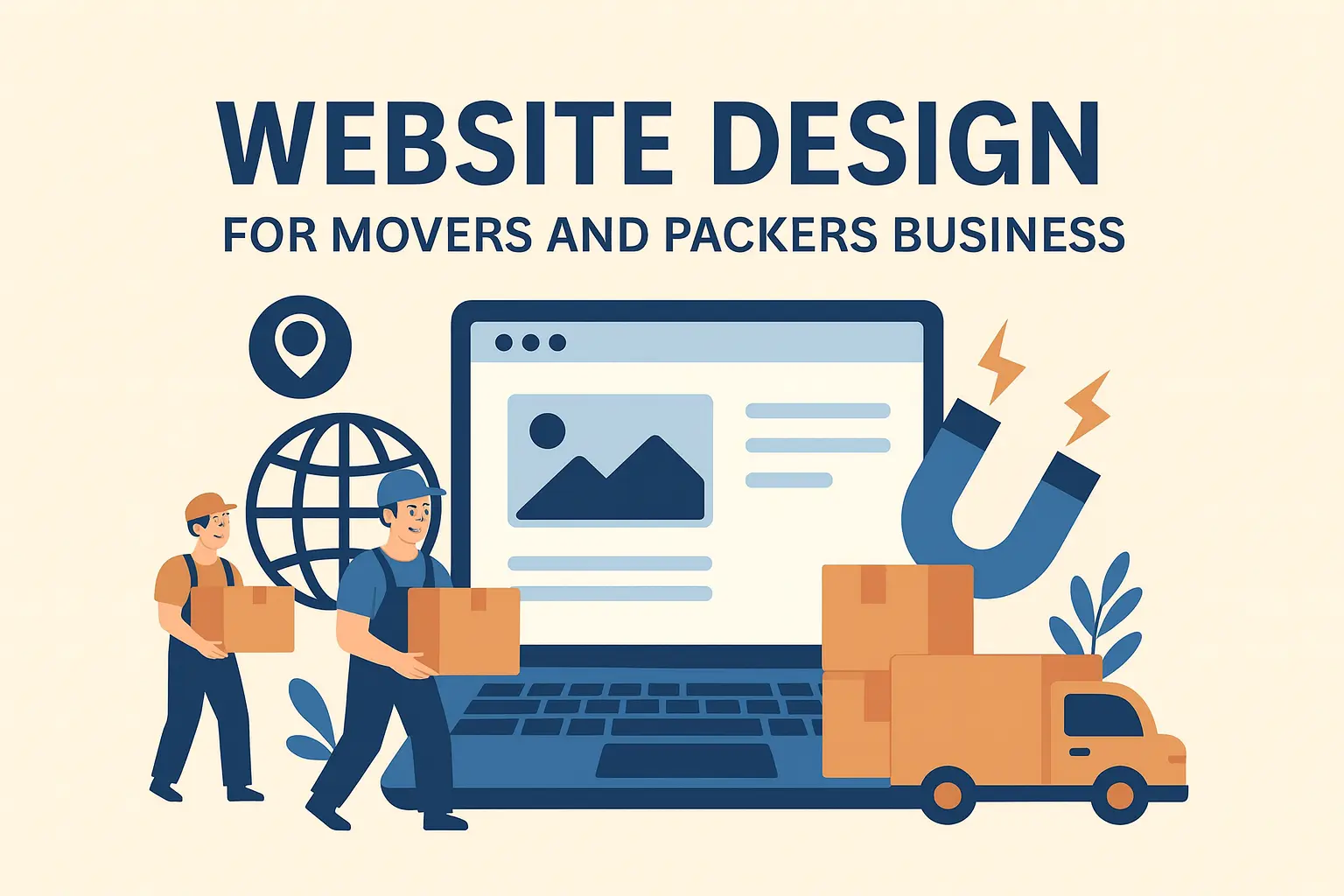
A well-designed website has become one of the strongest growth tools for movers and packers businesses. When people search for shifting services, they judge credibility within seconds. If your website looks outdated, loads slowly, or fails to offer essential information, visitors immediately switch to competitors. But when your website is modern, fast, and customer-focused, it naturally attracts more leads and converts them with ease.
As competition grows in 2026, your website must not only look professional—it should also guide the user smoothly from browsing to booking. Below are the most effective website design strategies that can help movers and packers businesses increase leads and build a stronger online presence.
1. Prioritizing a Clean, Mobile-First Design
Most customers searching for packers and movers use smartphones. This is why a mobile-first website is no longer optional—it is the foundation of a successful lead-generation strategy. Your design should adjust seamlessly across all screen sizes, load quickly, and present information in a structured manner.
A mobile-first website keeps users engaged longer because they don’t need to zoom, scroll endlessly, or wait for pages to load. Clear headings, minimal text blocks, and intuitive navigation improve user experience and build trust from the very first interaction. Google also prioritizes mobile-friendly websites, which directly contributes to higher local rankings.
2. Crafting a High-Converting Homepage
Your homepage plays the role of an online salesperson. It must instantly communicate who you are, what services you offer, and why a user should choose your company.
A strong hero section with a direct call-to-action such as “Get a Free Quote” or “Call Now for Instant Estimate” increases the chances of customer interaction. Keep the visuals clean and highlight your core services in a simple structure—home shifting, office relocation, vehicle transport, loading/unloading, and storage solutions. Follow this with a brief explanation of what sets your company apart, such as trained staff, insurance support, timely delivery, or secure packing methods.
Most movers and packers websites miss one key element: a list of service areas. Users often search “packers and movers in Gurgaon” or “best movers in Noida,” so showcasing your locations directly on the homepage improves both trust and SEO. Adding real customer reviews at the bottom of the homepage also boosts conversion because users feel reassured when they see genuine feedback.
3. Creating City-Specific Landing Pages
Local intent is extremely high in the movers and packers industry. This means people rarely search for national services—they search for professionals in their city or locality. To rank well on Google for local keywords, your website should include individual pages for each service area.
For example, a page titled “Packers and Movers in Gurgaon” or “Packers and Movers in Delhi NCR” helps Google understand your relevance for those locations. Each page should include details about your services in that area, the type of moves you handle, neighbourhoods you cover, and an easy way to request a quote.
These pages also improve user experience because visitors instantly find region-specific information without navigating through multiple pages.
4. Displaying Reviews, Ratings, and Real Proof of Work
Trust is everything in the moving industry. Customers want to ensure their household items are handled safely, and they rely heavily on reviews. Adding visible testimonials, Google ratings, and photographs of past relocation projects builds strong credibility.
Instead of overwhelming users with long review lists, highlight three or four strong testimonials and a clear link to your Google Business Profile. This keeps the design minimal while still showcasing trust signals. Including certification logos or partner badges further enhances reliability.
5. Adding an Easy to Use Quote Request System
A simple, fast, and clutter-free quote form can dramatically increase your lead generation. Avoid long, complicated forms that ask for too many details upfront. A basic form with name, phone, shift location, and date is enough to start the conversation.
Some businesses also integrate instant estimate calculators, which help users quickly understand approximate pricing. Even if the estimate is not exact, it motivates customers to enquire further. For urgency-based customers, a visible WhatsApp button increases conversions because they prefer direct communication instead of filling forms.
6. Improving Website Speed and Technical SEO
Fast-loading websites perform significantly better in search rankings. Movers and packers customers often browse several websites back-to-back, so slow loading immediately results in drop-offs and lost leads.
Compressing images, using lightweight design elements, and avoiding unnecessary scripts keeps the website performing smoothly. Clear page URLs, proper content structure, and optimized meta tags help Google crawl and understand your content more effectively.
Technical SEO also includes adding moving-industry-specific schema markup, which increases visibility in search results by helping Google display relevant information directly in snippets.
7. Publishing Helpful, Intent-Based Content
Customers often have questions about shifting costs, packing quality, insurance, safety, and delivery timelines. Writing helpful blogs and FAQs not only answers their queries but also positions your business as an expert.
Search engines prefer websites that offer valuable information, especially in industries involving trust and personal property. High-quality content improves EEAT (Expertise, Experience, Authoritativeness, Trustworthiness), which is crucial for ranking in 2026.
Frequently Asked Questions
1. How important is a website for movers and packers in 2026?
A modern website is essential because most customers look online for shifting services. A professional site builds trust, improves visibility, and increases the number of enquiries.
2. What features should a movers and packers website include?
A strong homepage, quote form, mobile-friendly layout, service area pages, reviews, clear service descriptions, and WhatsApp chat support.
3. Does website design impact Google rankings?
Yes. Website speed, structure, mobile performance, and optimized content directly influence local search rankings.
4. How can a movers and packers website increase leads?
By offering a seamless browsing experience, quick quote options, strong CTAs, real reviews, and city-specific landing pages.
Final Thought
A modern, fast, and professionally designed website is the most effective digital asset for movers and packers businesses looking to scale in 2026. When your website combines strong design, clear communication, and smart SEO, it naturally attracts more customers and boosts your lead flow. If you’re planning to upgrade your moving business website, Pointer Soft Technologies can help you build a clean, high-converting website that drives real results.