Many business owners invest in a website, yet still struggle with low engagement, high bounce rates, and poor lead generation. The problem often isn’t the service or product it’s that the website looks generic, feels forgettable, and fails to communicate value quickly. When visitors don’t understand what a business offers within a few seconds, they leave.
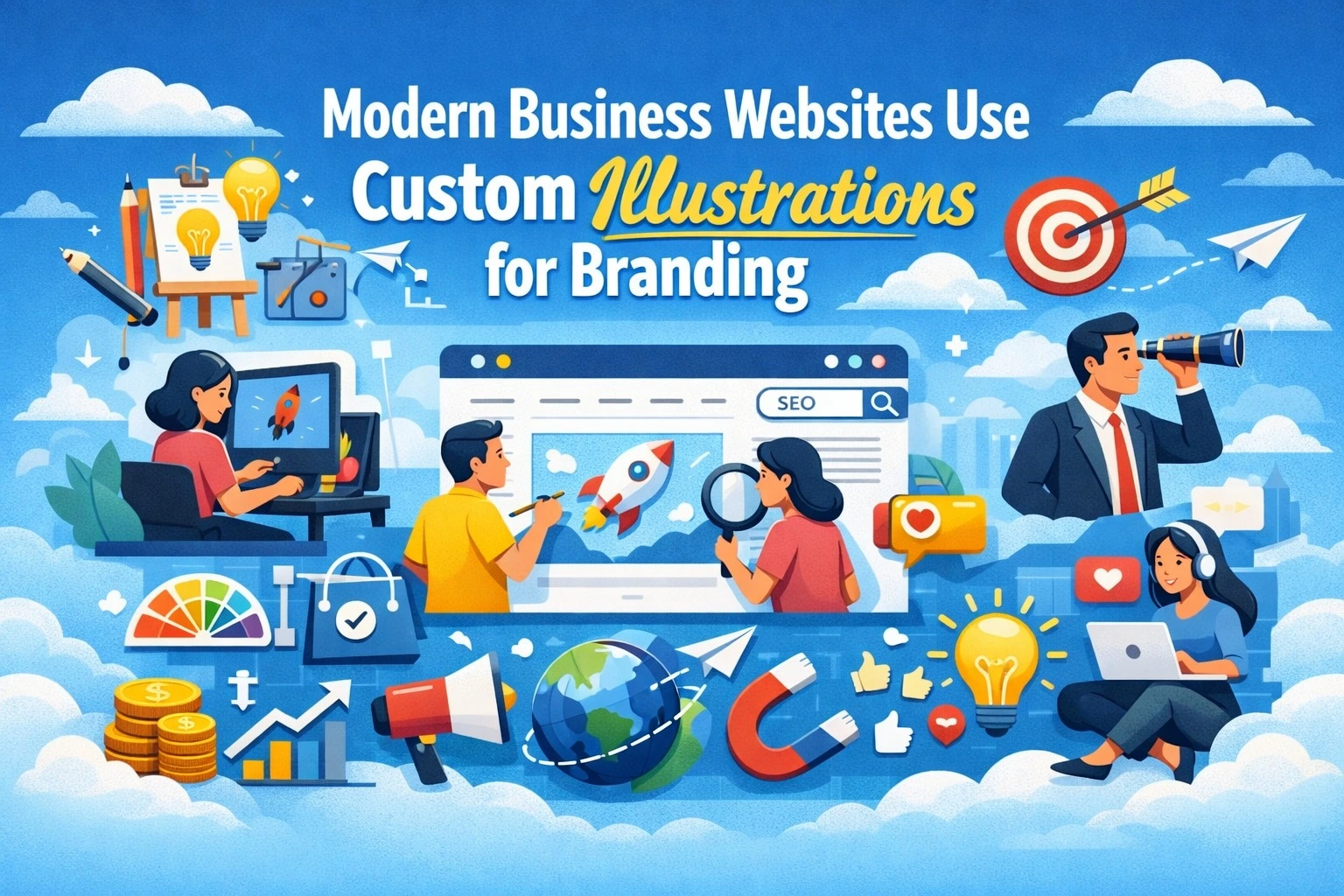
That’s where strategic website design makes a real difference. Modern websites are no longer just about layouts and colors; they are about creating a memorable brand experience. This is why forward-thinking businesses are moving beyond stock photos and generic visuals and choosing custom illustrations as part of their website design strategy.
Custom visuals are not just decorative elements. They help brands explain services clearly, guide user attention, and build emotional connection. When integrated properly into professional website design, illustrations become powerful tools that improve engagement and increase conversions turning a basic website into a business growth asset.
What Are Custom Illustrations in Web Design?
Custom illustrations are purpose-built graphics created specifically for a brand. These can include characters, icons, visual metaphors, storytelling scenes, or stylized UI elements that reflect the company’s personality and message.
Unlike stock photos, custom illustrations are:
- Unique to the brand
- Designed for specific messaging
- Aligned with brand colors and tone
- Flexible across marketing materials
Why Businesses Prefer Custom Illustrations
1. Stronger Brand Identity
Stock images appear on thousands of websites. Custom illustrations make your website look original and memorable. When visuals match your brand voice whether professional, friendly, innovative, or playful , visitors connect emotionally with your business. A strong visual identity builds brand recall, which increases the chance customers return later.
2. Better Storytelling
Complex services can be hard to explain using text alone. Illustrations simplify ideas by turning them into visual stories. For example:
- A cybersecurity company can show a shield protecting data
- A logistics firm can use animated routes and delivery icons
- A SaaS brand can visualize dashboards and workflows
People understand visuals faster than paragraphs of explanation.
3. Higher User Engagement
Websites that use thoughtful illustrations feel interactive and modern. Visitors stay longer when the design feels engaging. Longer session duration sends positive signals and also increases the chance users explore more pages. Illustrations also guide attention. Designers often use them to point toward buttons, forms, or key information improving user flow.
4. Improved Conversions
Visual hierarchy influences decisions. Custom illustrations can direct users toward calls-to-action (CTAs) by creating focus and reducing distractions. When users understand your offer quickly and feel comfortable with your brand, they are more likely to:
- Fill out a contact form
- Request a quote
- Book a consultation
- Make a purchase
Custom Illustrations vs Stock Images
| Factor | Custom Illustrations | Stock Images |
| Uniqueness | 100% original to your brand | Used by many other websites |
| Branding | Fully aligned with brand style | Limited customization |
| Storytelling | Can explain abstract services easily | Often generic and literal |
| User Engagement | High – feels modern and friendly | Moderate – may feel impersonal |
| Conversion Support | Can guide users toward CTAs | Mostly decorative |
| Long-Term Value | Reusable across campaigns and media | May require frequent replacement |
Where to Use Custom Illustrations on a Business Website
Businesses see the best results when they place illustrations strategically:
- Homepage hero section – To visually explain what the company does
- Service pages – To simplify processes and offerings
- About page – To show company culture or values
- Landing pages – To guide attention toward CTAs
- Explainer sections – To break down complex solutions
llustrations should always support content, not overwhelm it.
Case Study: How Illustrations Increased Leads for a Tech Company
A B2B software startup struggled with conversions. Their website used standard stock photos of office meetings and laptops. Visitors didn’t clearly understand the product.
Problem
- High bounce rate
- Low demo requests
- Confusing service explanation
Solution
The company redesigned the site using custom illustrations that visually explained their platform workflow. Designers created step-by-step illustrated scenes showing how users onboard, manage data, and generate reports. They also added illustrated icons near CTAs to draw attention.
Results (After 3 Months)
| Metric | Before Redesign | After Adding Illustrations |
| Average Time on Page | 48 seconds | 1 minute 32 seconds |
| Bounce Rate | 68% | 49% |
| Demo Requests | 22 per month | 61 per month |
| Contact Form Conversion Rate | 1.8% | 4.6% |
Visitors understood the product faster. Engagement improved, and lead generation nearly tripled.
When Businesses Should Use Custom Illustrations
Custom illustrations work best when:
You offer complex or abstract services
If your business provides technical, digital, or process-driven services (like SaaS, consulting, logistics, fintech, etc.), it can be hard to explain what you do using text alone. Custom illustrations visually simplify your process, making it easier for visitors to understand your value within seconds.
You want a modern, innovative brand image
Illustrations give your website a fresh and forward-thinking look. They signal creativity, originality, and attention to detail qualities customers associate with innovative and tech-savvy businesses.
You need to stand out in a competitive market
Many competitors use the same stock photos, which makes websites look similar. Custom illustrations create a unique visual identity that helps your brand stay memorable and instantly recognizable.
Your audience values creativity and user experience
If your target customers appreciate design, usability, and engaging digital experiences, illustrations make your website feel more interactive and enjoyable which increases trust and keeps users exploring longer.
Best Practices for Using Illustrations
1. Keep style consistent across all pages
Use the same illustration style (line thickness, colors, character style, shapes) throughout the website. Consistency makes your brand look professional and cohesive instead of random or mismatched.
2. Align colors with brand guidelines
Illustrations should use your brand’s primary and secondary colors. This strengthens brand recognition and ensures visuals feel like part of your identity, not separate design elements.
3. Avoid cluttering the layout
Too many illustrations can distract users from important content and calls-to-action. Use visuals strategically so they enhance the message rather than overwhelm the page.
4. Use illustrations to support key messages
Every illustration should have a purpose explaining a service, highlighting a benefit, or guiding attention to a CTA. Decorative visuals without meaning add noise, not value.
5. Combine with real photos when human trust matters
Illustrations are great for storytelling, but real photos build authenticity. Show actual team members, office spaces, or products alongside illustrations to create both creativity and credibility.
Final Thoughts
Custom illustrations help modern business websites look unique, explain services clearly, and guide users toward action. They strengthen brand identity while improving engagement and conversions.
Businesses that invest in thoughtful visual storytelling often gain a competitive advantage. A well-illustrated website does more than look good it communicates value faster and turns visitors into customers. Working with an experienced web design team, such as Pointer Soft Technologies, can help ensure these visuals are not only creative but also strategically aligned with branding and lead generation goals.
FAQ
1. Are custom illustrations expensive for small businesses?
Costs vary, but many agencies offer scalable illustration packages. The long-term branding value often outweighs the initial investment.
2. Do illustrations slow down website speed?
Not when optimized properly. Vector-based illustrations load quickly and perform well on modern websites.
3. Can illustrations replace all photography on a website?
Not always. Service businesses often combine real team photos with illustrations for a balance of trust and creativity.
4. Do illustrations help with SEO?
Indirectly, yes. Better engagement, longer session time, and improved conversions contribute to stronger overall website performance.
5. How do I know if my brand needs custom illustrations?
If your website looks generic, struggles to explain services, or lacks personality, custom illustrations can make a strong impact.