When people ask, “Where do you search online?” the answer usually comes instantly: Google. And for good reason. More than 8.5 billion searches happen every day on Google alone, delivers results in milliseconds, and sets the benchmark for search accuracy and relevance. But search behavior is evolving. The internet extends far beyond one platform. Today, users explore multiple search engines based on privacy needs, content formats, academic research, regional preferences, and language discovery. Each search engine follows its own ranking systems, user behavior patterns, and visibility rules.
For digital marketers, website owners, and businesses investing in professional SEO services, understanding this broader search ecosystem is no longer optional. It directly impacts how websites gain visibility, attract the right audience, and compete across global and regional markets. Students and researchers benefit as well by using search engines designed for academic content, multimedia discovery, or unbiased information access. Choosing the right search engine often leads to better insights and more reliable data. This is why knowing the top search engines beyond Google matters in 2026. A well-planned SEO strategy aligns content with how different search engines interpret relevance, trust, and user intent.
Search Engine Market Share & Global Trends (2026)
Search engine usage keeps evolving based on privacy concerns, AI integration, and regional preferences. While Google dominates globally with over 85% market share, other platforms are gaining traction in specific regions.
- Bing is growing due to AI-powered results and integration with Microsoft products.
- Baidu dominates the Chinese market.
- Yandex is widely used in Russia and neighboring countries.
- Privacy-focused engines like DuckDuckGo are gaining popularity among users concerned about data tracking.
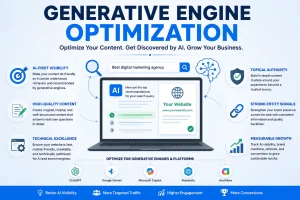
Rise of AI-Powered Search Engines
Modern search engines are shifting from keyword-based results to AI-generated answers. Tools like:
- Google (AI Overviews)
- Microsoft powered Bing
- OpenAI powered AI tools
They are transforming how users search online. Instead of browsing multiple links, users now expect direct summarized answers. This shift is changing SEO strategies, focusing more on structured data, authority signals, and helpful content.
| Search Engine | Country | Key Feature | Best For |
|---|---|---|---|
| USA | AI + Largest Index | Global Search | |
| Bing | USA | AI Integration | Image & Video Search |
| Baidu | China | Mandarin Focus | China Market |
| Yandex | Russia | Localized Results | Russia |
| DuckDuckGo | USA | Privacy Protection | Anonymous Search |
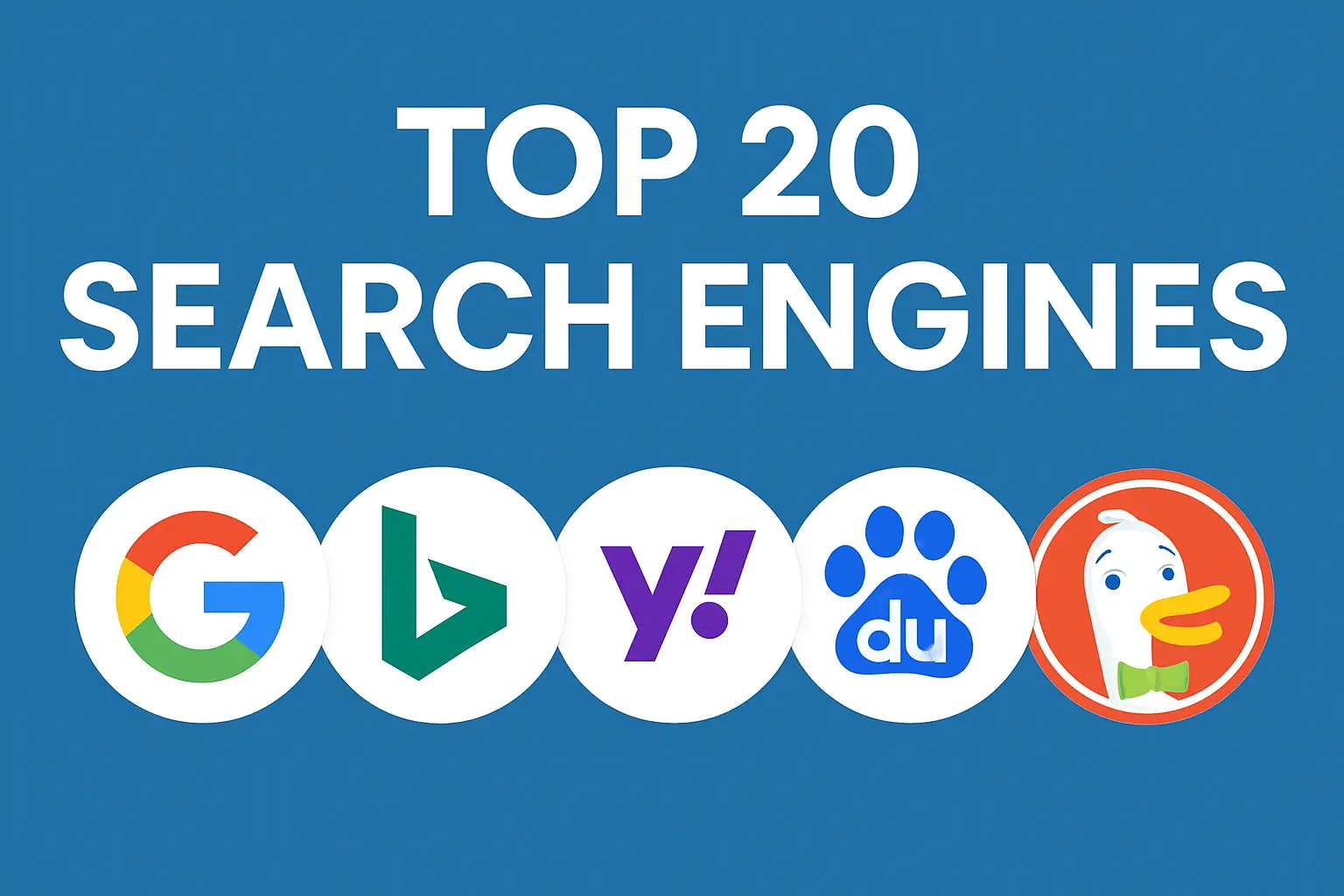
Let’s explore the Top 20 Search Engines you should know in 2026 and understand how they shape modern search behavior and SEO performance.
1. Google
Google dominates global search due to its advanced algorithms, AI-powered features, voice search, image search, and massive index of web pages. It delivers highly relevant, personalized results and supports businesses through tools like Google Search Console and Ads.
2. Bing
Bing is Microsoft’s search engine and powers Yahoo search results. It integrates seamlessly with Windows, Edge, and AI tools like Copilot, offering strong visual search, rewards programs, and competitive advertising options.
3. Yahoo
Yahoo remains popular for news, finance, sports, and email services. While its search results are powered by Bing, its loyal audience continues to use Yahoo as a content-first web portal.
4. Baidu
Baidu is China’s leading search engine and the core gateway to online information for millions of Chinese users. Baidu is the leading search engine in China, designed specifically for Chinese language and local regulations. It offers maps, cloud services, AI tools, and strong mobile search dominance within China.
5. Yandex
Yandex is widely used in Russia and neighboring regions. It excels at understanding local languages, search intent, maps, and regional services like music, navigation, and cloud storage. A favorite in Russia and Eastern Europe, Yandex offers localized search, maps, music, and cloud services tailored to regional users.
6. DuckDuckGo
If privacy matters to you, DuckDuckGo is a top pick. It does not track your searches or store personal data, making it popular with security-focused users.It’s popular among users who want unbiased results without personalized tracking or targeted ads.
7. Ask.com
Previously known as Ask Jeeves, this search engine focuses on answering questions. While not very dominant, it still has a loyal audience.Ask.com focuses on question-and-answer style searches. While its market share is smaller, it still attracts users looking for direct answers rather than traditional web listings.
8. Ecosia
A unique eco-friendly search engine! It uses its revenue to plant trees worldwide. Every search contributes to the planet how cool is that?
9. AOL.com
A legacy search engine that still exists mainly due to its online content and email user base. It uses Bing-powered search results.
10. Naver
South Korea’s top search engine often called the “Google of Korea.” Naver provides advanced social, shopping, and news experiences tailored to Korean users.
11. Seznam
Popular in the Czech Republic, Seznam offers strongly localized search results along with media and email services.
12. Qwant
A France-based privacy search engine that doesn’t track your activity. It has a clean interface and is expanding across Europe.
13. Startpage
This is another privacy-focused search engine, but with a twist it uses Google’s results without storing user data. You get Google-level accuracy with full anonymity.
14. Swisscows
A family-friendly search engine built in Switzerland that filters explicit content automatically and focuses on safe browsing.
15. Boardreader
Perfect for social listening! Boardreader lets you search forums and online communities helpful for marketers and researchers tracking discussions.
16. WolframAlpha
Not a general search engine it’s a computation-based knowledge engine. Great for solving math problems, scientific data, facts, and statistics.
17. Gibiru
A non-tracking search engine designed for unfiltered and private search results. Some users call it a solution for accessing content that others hide.
18. Sogou
One of China’s widely used search engines, especially known for its advanced keyboard input system and popularity among Chinese language users.
19. Brave Search
Created by the makers of the Brave browser, this search engine focuses heavily on privacy and uses its own independent index rather than relying on Google or Bing.
20. Internet Archive Search
This one’s quite special, it helps you find old versions of websites using the Wayback Machine. Perfect for research, SEO history checks, and digital nostalgia.
Privacy-First Search Engines Are Growing Rapidly
Privacy concerns are reshaping how users search online. Many users now prefer search engines that do not track behavior, store personal data, or build advertising profiles. DuckDuckGo focuses on anonymous searches and unbiased results. It does not personalize rankings based on search history, which means content quality and relevance matter more than user behavior data.
Brave Search integrates directly with the Brave browser and blocks ads, trackers, and third-party cookies by default. It rewards websites that load fast, respect privacy, and deliver clear information. Startpage delivers Google-powered results without tracking users. It acts as a privacy layer between users and Google, making it popular among professionals and privacy-conscious audiences.
These platforms are growing steadily, especially in Europe and tech-savvy markets. Websites that rely heavily on aggressive tracking, intrusive popups, or dark UX patterns perform poorly on privacy-first search engines. This shift pushes businesses toward clean UX, transparent data practices, fast performance, and content-driven SEO.
AI-Powered Search and Zero-Click Results Are Reshaping SEO
Search engines now use AI models to answer queries directly on the results page. Features like featured snippets, People Also Ask, AI overviews, and instant answers reduce the need for users to click through to websites.
Zero-click searches occur when users get their answers directly from search results without visiting any website. This trend is growing rapidly, especially for informational queries. AI-driven search systems analyze intent, context, and entity relationships rather than just keywords. They prioritize structured content, clear explanations, and authoritative sources.
To stay competitive, websites must:
- Write content that answers questions clearly and concisely
- Use structured data and schema markup
- Optimize for People Also Ask and featured snippets
- Build strong topical authority instead of isolated keyword pages
SEO is shifting from traffic generation to visibility, authority, and trust. Even when users do not click, appearing in AI summaries strengthens brand recall and credibility.
Why Do These Alternatives Matter?
For years, most of us believed Google is the only destination for getting answers. But exploring multiple search engines helps you:
- Discover localized or niche-specific data
- Get broader SEO insights and better marketing reach
- Protect privacy where needed
- Access unique resources like forums, archives, and academic results
- Reach global customers with regional search platforms
If you are running a business or doing SEO, sticking only to Google means missing potential audience on Bing, DuckDuckGo, Yandex, or Naver. A multichannel approach boosts traffic and brand visibility.
Final Thoughts
Search engines are the foundation of how we explore the digital world. Yes, Google leads the pack, but these Top 20 Search Engines show that the internet is full of diversity, innovation, and specialized solutions for every type of user.
If you’re a marketer, keeping an eye on these alternatives can give you a competitive edge. And if you’re a regular user, switching search engines occasionally may surprise you with better privacy, unique features, and even a greener planet. The future of search is evolving and you now have more powerful choices than ever! And if you are a business owner looking to build an online presence and appear on search engines globally, partnering with an experienced digital team like Pointer Soft Technologies can help you rank better, improve visibility, and grow faster in this competitive market.
Frequently Asked Questions About Search Engines
1. What is a search engine in SEO terms?
A search engine is a web-based software system that uses automated bots (crawlers or spiders) to discover, crawl, and index web pages. Platforms like Google and Bing organize billions of pages in their search index and rank them based on algorithms that evaluate relevance, authority, backlinks, content quality, and user experience signals.
2. How do search engines crawl and index websites?
Search engines use bots such as Googlebot to crawl websites by following internal and external links. The content is then stored in a massive search index. Technical factors like XML sitemaps, robots.txt, canonical tags, structured data, and page speed influence how efficiently search engines crawl and index content.
3. What ranking factors do search engines use?
Modern search engines evaluate multiple ranking signals, including:
- Keyword relevance and semantic intent
- High-quality backlinks and domain authority
- Core Web Vitals and page speed
- Mobile-first design
- Structured data (Schema Markup)
- User engagement signals (CTR, dwell time, bounce rate)
For example, Google uses advanced AI algorithms to understand search intent beyond exact keyword matching.
4. Which search engine has the largest market share?
Google dominates the global search engine market with over 85% share. However, region-specific engines like Baidu (China) and Yandex (Russia) lead in their respective markets.
5. What is a privacy-focused search engine?
A privacy-focused search engine does not track user activity, search history, or personal data. DuckDuckGo is one of the most popular privacy-first search engines, offering anonymous browsing and non-personalized results.
6. How are AI-powered search engines changing SEO?
AI-powered search engines are shifting from traditional keyword-based results to contextual and conversational responses. Platforms like Microsoft integrated AI into Bing, while Google introduced AI-generated summaries. This evolution emphasizes structured data, authoritative content, entity optimization, and topical relevance in SEO strategies.
7. How do search engines make money?
Search engines generate revenue primarily through digital advertising models such as Pay-Per-Click (PPC), sponsored listings, shopping ads, and display ads. For instance, Google earns the majority of its revenue through Google Ads, making search advertising one of the largest digital marketing channels globally.
8. Why should businesses optimize for multiple search engines?
While Google dominates globally, businesses targeting international markets should also optimize for:
- Baidu for the Chinese market
- Yandex for Russia
- Naver for South Korea