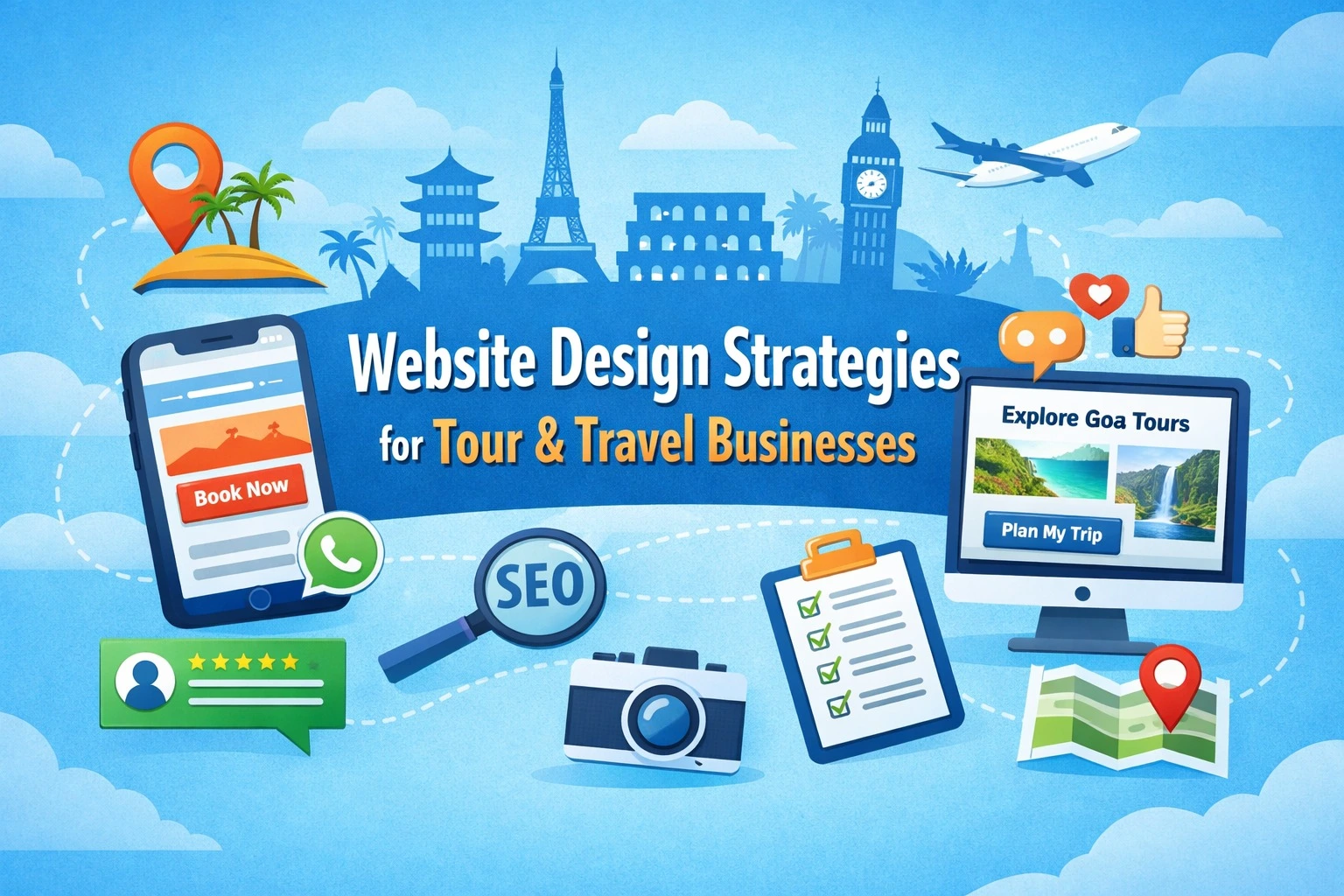
For most tour and travel businesses, the website is not just an online brochure , it is the first sales executive. Before a traveller calls, messages on WhatsApp, or submits an enquiry form, they quietly judge your business based on how your website looks, loads, and guides them. A well-designed website design doesn’t just attract visitors; it turns curious travellers into serious enquiries.
Many travel businesses struggle with traffic that doesn’t convert. The reason is rarely pricing alone. In most cases, it’s the way the website is designed and structured. Let’s look at the website design strategies that actually help tour and travel businesses get more enquiries.
Design for intent, not just appearance
A visually attractive website is important, but beauty alone does not generate enquiries. Travel websites must be designed around user intent. Visitors usually land on your site with one of three goals: exploring destinations, comparing packages, or checking credibility.
Your design should guide them smoothly toward the next step enquiry. This means clear headings, logical page flow, and no confusion about what to do next. When a visitor feels lost, they leave. When the path is clear, they enquire.
Mobile-first design is non-negotiable
A large percentage of travel searches happen on mobile devices. If your website looks perfect on desktop but clumsy on mobile, you are losing enquiries daily without realizing it.
Mobile-first design ensures buttons are easy to tap, text is readable, enquiry forms are short, and WhatsApp or call buttons are always visible. A mobile-friendly website doesn’t just improve user experience; it builds trust. Travellers associate smooth mobile experiences with professional service.
Use real visuals that build trust
Stock images may look polished, but travellers can sense when visuals don’t reflect reality. Using real photos from your tours, hotels, vehicles, and team creates authenticity. It reassures visitors that your business is active and genuine.
Design-wise, images should support content, not overpower it. Clean layouts with well-placed images help visitors imagine themselves on the trip. That emotional connection often leads directly to enquiries.
Make enquiry options obvious and effortless
One of the biggest mistakes tour websites make is hiding enquiry options. If a visitor has to search for a contact form, they will likely give up.
Effective travel websites repeat enquiry opportunities naturally throughout the site. This includes “Plan My Trip” buttons, short enquiry forms, and visible WhatsApp or call icons. The key is simplicity. Ask only what you truly need at the first stage. Long forms reduce conversions.
Location-based pages attract ready-to-book visitors
Generic travel pages struggle to convert. Location-specific pages perform much better. A page dedicated to “Goa Honeymoon Packages” or “Kerala Family Tours” attracts visitors who already know what they want.
From a design perspective, these pages should be focused, distraction-free, and clearly structured. When combined with local SEO, they bring in high-intent traffic that converts into enquiries faster than generic visitors.
Speed and clarity matter more than animations
Slow websites quietly kill enquiries. Travel websites often include heavy images, sliders, and animations that increase load time. A fast-loading, clean website keeps visitors engaged.
Clarity also matters. Avoid cluttered layouts and unnecessary sections. Visitors should immediately understand what you offer, who it’s for, and how to contact you. Simple design choices often outperform flashy visuals.
Social proof should feel natural, not forced
Reviews, testimonials, and ratings play a major role in travel decisions. Instead of placing them randomly, integrate them naturally into the design near enquiry buttons, package sections, or pricing details.
Short, genuine reviews work better than long, generic testimonials. They reduce hesitation at the exact moment a visitor is deciding whether to enquire.
Case study: How a tour operator increased enquiries through redesign
A mid-sized tour operator offering domestic holiday packages was receiving decent traffic but very few enquiries. Their website looked outdated, loaded slowly, and had a single contact form hidden on the last page.
After redesigning the website with a mobile-first approach, clear destination pages, visible WhatsApp buttons, and real tour photos, the impact was noticeable within weeks. The enquiry form was simplified, and enquiry CTAs were placed contextually instead of aggressively.
Within three months, the business saw a significant increase in enquiry submissions and WhatsApp messages without increasing ad spend. The difference was not traffic, but design that respected user intent.
Design is a long-term lead generation asset
Unlike ads that stop working when budgets end, a well-designed travel website works continuously. It builds trust, attracts the right audience, and converts visitors quietly in the background.
When website design focuses on usability, clarity, and traveller psychology, enquiries follow naturally.
Frequently Asked Questions (FAQ)
How important is website design for tour and travel businesses?
Website design is critical because it directly affects trust and conversions. Travellers often decide whether to enquire within seconds based on design quality and ease of use.
Can a redesign really increase enquiries without ads?
Yes. Many travel businesses already get traffic, but poor design blocks conversions. Improving layout, speed, and CTAs can significantly increase enquiries without additional advertising.
What features matter most for a travel website?
Mobile responsiveness, fast loading speed, clear enquiry buttons, real visuals, and location-based pages matter more than complex features.
Should travel websites focus more on SEO or design?
Both work together. SEO brings visitors; design converts them. One without the other limits growth.
How often should a tour website be redesigned?
A refresh every 2–3 years helps keep the website modern, competitive, and aligned with user expectations.
Final thought
Tour and travel businesses don’t lose enquiries because people aren’t interested in travelling—they lose them because their website doesn’t build enough confidence or make the next step obvious. A well-planned website design quietly does the heavy lifting by guiding visitors, answering doubts, and encouraging them to start a conversation.
At Pointer Soft Technologies, we’ve seen how small, thoughtful design changes like clearer enquiry paths, mobile-first layouts, and destination-focused pages can significantly improve enquiry flow for travel businesses. When website design is aligned with user intent, it stops being just an online presence and starts becoming a consistent source of leads.